
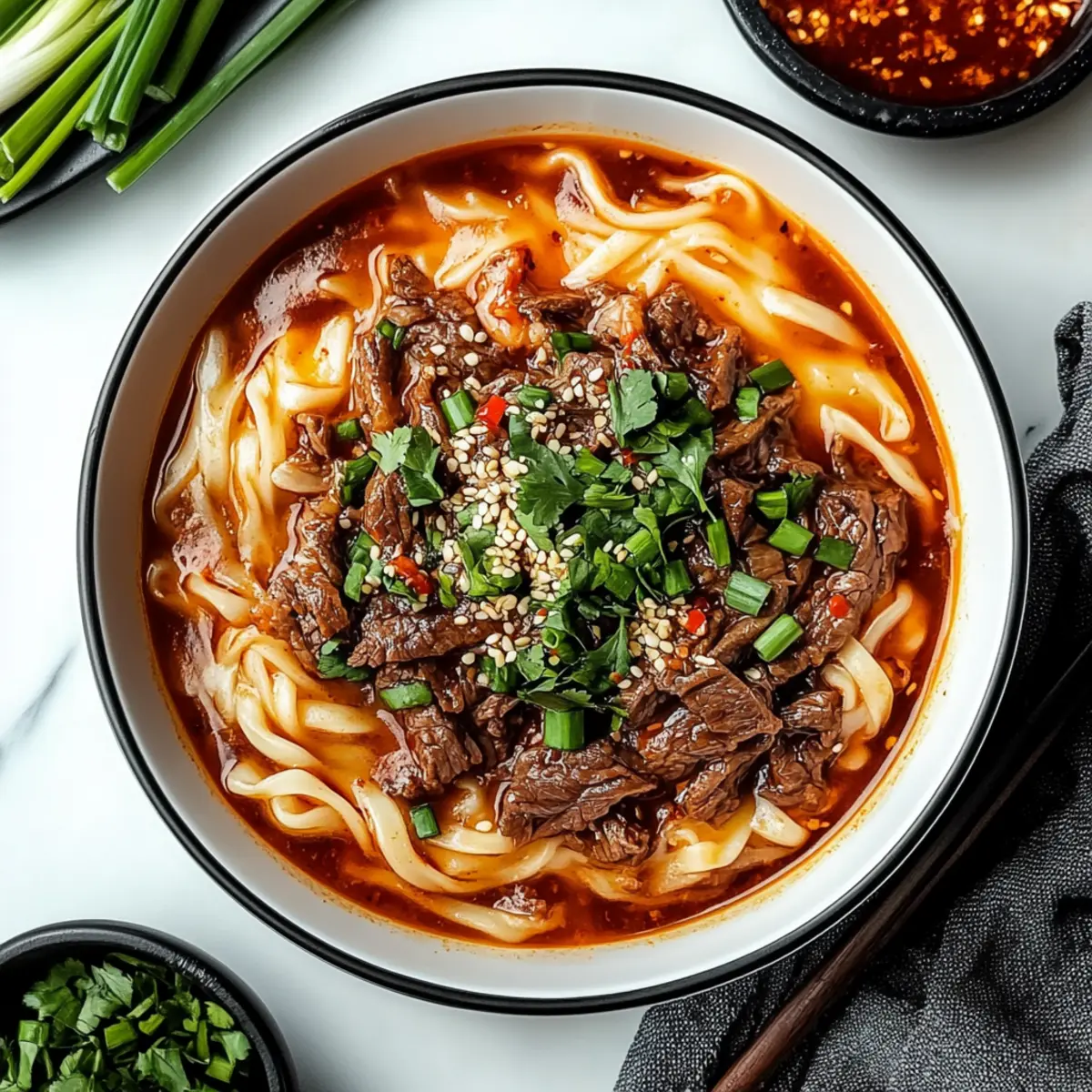
The aroma hit me like a warm embrace, pulling me into the kitchen with its promise of deliciousness. I was on a quest for a weeknight dinner that brought excitement back to the table, and that’s when I stumbled upon my favorite recipe for Spicy Korean Gochujang Beef Noodles. This vibrant dish not only comes together in under 30 minutes, making it perfect for busy evenings, but it also delivers a fiery flavor that will have everyone coming back for seconds. Imagine tender strips of beef mingling with chewy noodles, all wrapped in a luscious, spicy gochujang sauce—comfort food elevated to new heights! Ready to spice up your dinner routine? Let’s dive into this culinary adventure together!
Why Should You Try This Dish?
Quick Preparation: Whip up this meal in just 30 minutes, making it a perfect choice for those hectic weeknights when time is of the essence.
Explosive Flavors: The fiery blend of gochujang with savory beef and fresh vegetables creates a flavor explosion that will tantalize your taste buds.
Universal Appeal: Loved by both spice enthusiasts and novices alike, this recipe is a crowd pleaser that will impress family and friends at your next gathering.
Versatile Base: Feel free to swap the beef for chicken, pork, or even tofu to cater to your dietary preferences. Check out some inspiration with our delicious Casserole Ground Beef recipe!
Endless Variations: From lettuce wraps to cold noodle salads, the possibilities are endless for transforming this dish into something new.
Easy Clean-Up: One skillet is all you need, making for a stress-free cooking experience with minimized cleanup!
Spicy Korean Gochujang Beef Noodles Ingredients
For the Beef
• Beef sirloin – This tender cut adds depth of flavor; chicken, pork, or tofu can work as great substitutes.
• Vegetable oil – Essential for high-heat cooking; consider sesame oil for a nutty touch.
For the Sauce
• Gochujang – The star ingredient that brings spice and flavor depth; adjust the amount based on personal heat preference.
• Soy sauce – Adds umami; use low-sodium options for a healthier twist.
• Brown sugar – Balances the heat; try honey or coconut sugar for a refined alternative.
• Rice vinegar – Introduces acidity for flavor balance; apple cider vinegar is a fine substitute if needed.
• Sesame oil – Optional, but recommended for an authentic, nutty flavor boost.
For the Vegetables
• Garlic – Freshly minced for the best aroma; dried garlic can be a quick substitute if in a pinch.
• Onion – Adds sweetness; yellow or white onions work perfectly.
• Red bell pepper – Brings sweetness and vibrant color; mix and match with other bell peppers for variety.
For the Noodles and Garnish
• Cooked noodles – The foundation for this dish; feel free to use rice noodles or spaghetti if preferred.
• Sliced green onions – Provides fresh brightness; chives or shallots are great alternatives.
• Sesame seeds – Optional garnish that adds crunch and visual appeal; any seeds can work in a pinch.
With this ingredient list in hand, you’re well on your way to whipping up your own Spicy Korean Gochujang Beef Noodles! The rich flavors of each component come together to create a soothing dish that’s as delightful to prepare as it is to eat. Happy cooking!
Step‑by‑Step Instructions for Spicy Korean Gochujang Beef Noodles
Step 1: Prep Ingredients
Begin by slicing the beef sirloin into thin strips for quick cooking. Mince 2-3 cloves of garlic and slice one onion alongside a red bell pepper into thin pieces. Cook your choice of noodles according to package instructions, draining and setting them aside once done. This preparation sets you up perfectly for creating your flavorful Spicy Korean Gochujang Beef Noodles.
Step 2: Cook Beef
In a large skillet, heat 1 tablespoon of vegetable oil over medium-high heat until shimmering. Add the sliced beef in a single layer, cooking for about 2-3 minutes until browned on one side. Flip the beef and cook for an additional 1-2 minutes until fully browned but still tender. Remove the beef from the skillet and let it sit, allowing the juices to lock in while you sauté the vegetables.
Step 3: Sauté Vegetables
Using the same skillet, add the minced garlic and sliced onion, stirring continuously for about 1 minute until fragrant and translucent. Next, introduce the sliced red bell pepper to the pan, cooking for another 3-4 minutes until the peppers are tender yet still crisp. This vibrant mix will enhance the flavor profile of your Spicy Korean Gochujang Beef Noodles.
Step 4: Make Sauce
In a small bowl, whisk together 2 tablespoons of soy sauce, 1 tablespoon of brown sugar, 2 tablespoons of gochujang, 1 teaspoon of sesame oil, and 1 tablespoon of rice vinegar. Mix until the sugar dissolves completely. This luscious sauce is the heart of your dish, bringing together the beef and veggies in a fiery embrace.
Step 5: Combine
Return the cooked beef to the skillet along with the sautéed vegetables. Pour the prepared sauce over the mixture and stir well to coat everything evenly. Then, add the cooked noodles to the skillet, tossing thoroughly to ensure that each noodle is enveloped in that spicy goodness. This combination will make your Spicy Korean Gochujang Beef Noodles irresistible!
Step 6: Heat Through
Continue to cook everything together for an additional 2-3 minutes, stirring frequently until the dish is heated throughout and the flavors meld beautifully. You’ll know it’s ready when everything is hot and the noodles look glossy and vibrant, making it a welcoming meal for you and your family.
Step 7: Garnish
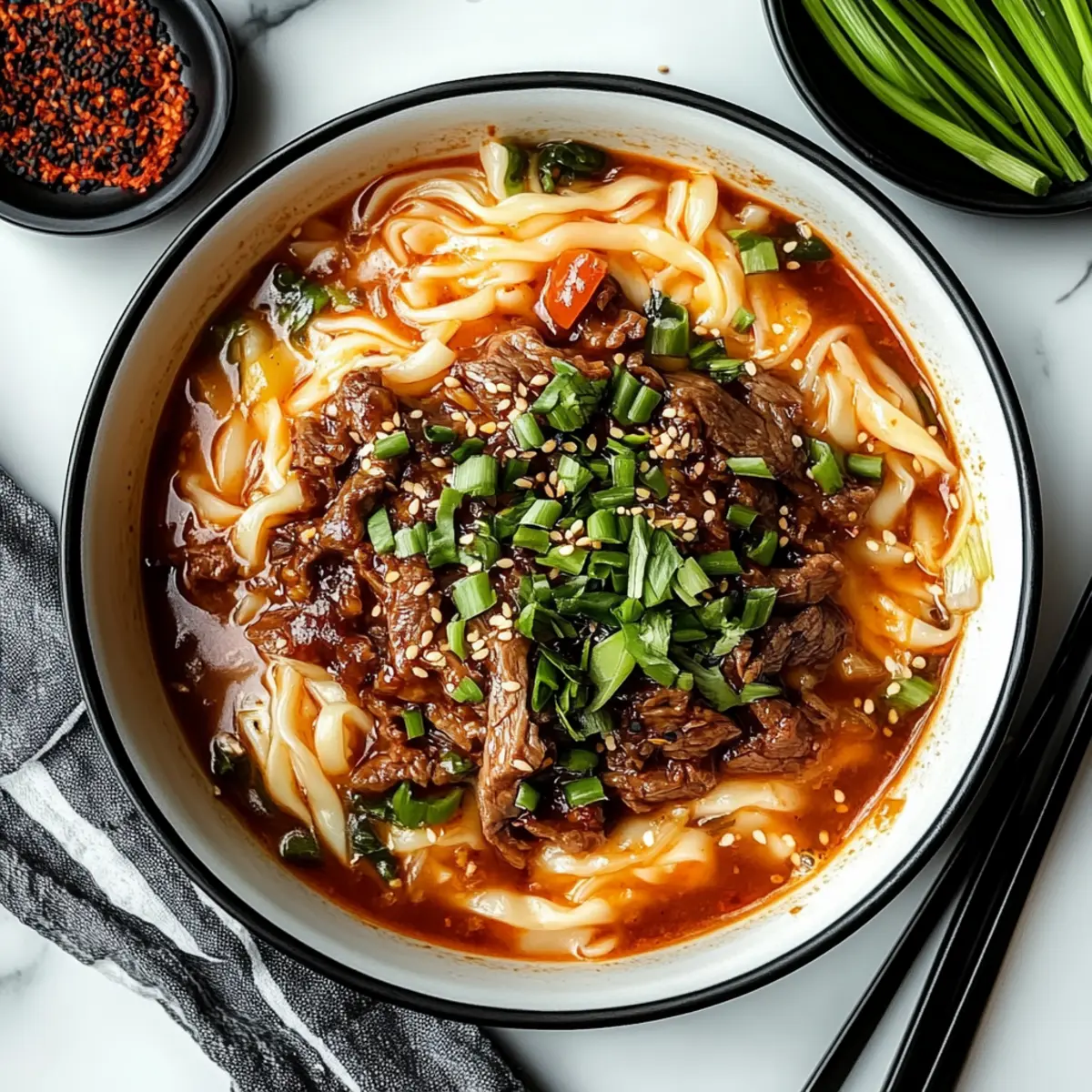
Once off the heat, sprinkle the prepared dish with sesame seeds and chopped green onions for a fresh touch. This final step enhances both the flavor and presentation of your Spicy Korean Gochujang Beef Noodles, making it as delightful to look at as it is to eat.
Make Ahead Options
These Spicy Korean Gochujang Beef Noodles are a fantastic choice for meal prep! You can prepare the beef and sauce up to 24 hours in advance, storing them separately in airtight containers in the refrigerator to maintain their quality. Simply slice the beef and whisk together the sauce (soy sauce, gochujang, brown sugar, sesame oil, and rice vinegar) for an easy assembly later. The cooked noodles can also be prepped up to 3 days ahead; just toss them with a little oil to prevent sticking. When you’re ready to serve, quickly sauté the vegetables, combine everything in a skillet, heat through, and garnish with sesame seeds and green onions for a delicious meal in no time!
Expert Tips for Spicy Korean Gochujang Beef Noodles
-
Temperature Matters: Ensure your skillet is hot before adding the beef. This helps achieve a perfect sear, locking in juicy flavors for your Spicy Korean Gochujang Beef Noodles.
-
Don’t Overcrowd: Cook the beef in batches if necessary to prevent steaming. Overcrowding can lead to tough meat instead of the tender texture you desire.
-
Taste as You Go: Gochujang varies in heat level; start with less and adjust according to your spice tolerance. Taste testing allows you to personalize the flavor beautifully.
-
Quick Veggie Cooking: Aim for crisp vegetables. Sauté them just until tender but still vibrant, avoiding overcooking for a delightful crunch in your dish.
-
Let It Rest: After cooking, allow the dish to sit for a minute before serving. This resting period helps flavors meld together, enhancing the overall taste experience.
-
Garnish Generously: Don’t skimp on the sesame seeds and green onions. They add not only flavor but also visual appeal to your Spicy Korean Gochujang Beef Noodles!
How to Store and Freeze Spicy Korean Gochujang Beef Noodles
Fridge: Store leftovers in an airtight container for up to 3-4 days. This keeps the flavors intact while ensuring they stay fresh.
Freezer: For longer storage, freeze the noodles and sauce separately in airtight containers for up to 2 months. This helps maintain the best quality when reheating.
Reheating: Thaw overnight in the fridge before reheating. Warm in a skillet over medium heat, adding a splash of water to restore texture and moisture to your Spicy Korean Gochujang Beef Noodles.
Room Temperature: To avoid spoilage, do not leave leftovers out at room temperature for more than 2 hours. Always prioritize keeping your meal safe and delicious!
Variations & Substitutions for Spicy Korean Gochujang Beef Noodles
Feel free to make this dish your own with these exciting twists and swaps that elevate flavor and cater to your tastes!
-
Beef Alternatives: Substitute beef sirloin with thinly sliced chicken, pork, or tofu for a different protein approach. Each option brings its unique flavor to the dish.
-
Noodle Types: Use rice noodles, udon, or even spaghetti instead of traditional Asian noodles. It’s a fun way to experiment with different textures while still enjoying a hearty meal.
-
Vegetable Variations: Swap out red bell pepper for any seasonal veggies like broccoli, snow peas, or carrots. Adding vibrant greens not only enhances the nutrition but also keeps every bite exciting!
-
Low-Sodium Sauce: Opt for low-sodium soy sauce to cut down on salt while keeping it flavorful. You can also make your homemade sauce using ingredients like tamari for a gluten-free option!
-
Sweetness Tweaks: Instead of brown sugar, use honey or maple syrup for natural sweetness. This little change can impart a delightful flavor twist while maintaining the same balance.
-
Spice Level Adjustments: If you prefer heat without sweetness, use sambal oelek as a substitute for gochujang. You’ll still enjoy a spicy kick that will awaken your taste buds!
-
Cold Noodle Salad: Transform leftovers into a refreshing dish by mixing with chilled vegetables and dressing them lightly with sesame oil and rice vinegar for a vibrant cold noodle salad—perfect for warmer days!
-
Garnish Options: Instead of sesame seeds and green onions, try coriander or cilantro for a fresh herbaceous finish. This will add a lovely depth and brightness at the end of your cooking journey.
Remember, these variations not only personalize your experience but also help you explore new flavors. Whether you go for a warming bowl of Spicy Korean Gochujang Beef Noodles or try a refreshing cold noodle salad, there’s endless fun in the kitchen. Enjoy the journey of flavors!
What to Serve with Spicy Korean Gochujang Beef Noodles
Transform your meal into a vibrant feast that delights the senses, balancing flavors and textures perfectly.
-
Kimchi: This traditional Korean side dish adds a tangy crunch, complementing the spicy flavors of the beef noodles beautifully. The fermented taste pairs perfectly with the rich, savory sauce, creating an irresistible contrast.
-
Crispy Spring Rolls: These delightful bites bring a satisfying crunch and are a great way to add a fresh, vegetable-filled side to your meal. Serve them with a sweet chili dipping sauce for an extra kick!
-
Garlic Bok Choy: Lightly sautéed bok choy drizzled with garlic-infused oil offers a tender, slightly crisp texture that brightens the palate. Its natural sweetness beautifully balances the heat of the gochujang sauce.
-
Steamed Jasmine Rice: A fluffy bed of jasmine rice serves as the perfect neutral canvas, soaking up all the bold flavors from the spicy Korean gochujang beef noodles. Plus, it adds an inviting aroma to your dining experience.
-
Pear Salad: A refreshing salad with sliced pear, mixed greens, and a tangy vinaigrette can add a refreshing contrast to your meal. The sweetness of the pear and the crispness of the greens uplift every bite.
-
Cold Beer: A chilled lager or a light beer can complement the spiciness of the dish beautifully, offering a refreshing contrast and a way to unwind during your meal.
-
Mango Sticky Rice: For dessert, this sweet treat adds a luscious finish. The creaminess of coconut and soft texture of sticky rice balance out the spicy elements, creating a delightful meal conclusion.
-
Herbal Tea: A soothing herbal tea, such as chamomile or mint, cleanses the palate and aids digestion after the fiery flavors, making it a perfect beverage choice to round off your meal.
Elevate your dining experience by pairing these delicious sides with your Spicy Korean Gochujang Beef Noodles!
Spicy Korean Gochujang Beef Noodles Recipe FAQs
What type of beef should I use for this recipe?
Absolutely! I recommend using beef sirloin for its tenderness and rich flavor. However, if you’re looking for alternatives, chicken, pork, or tofu can also work beautifully in this dish.
How long can I store leftovers in the fridge?
You’ll want to refrigerate your leftovers in an airtight container for up to 3-4 days. This ensures that your Spicy Korean Gochujang Beef Noodles stay flavorful and safe to eat.
Can I freeze the Spicy Korean Gochujang Beef Noodles?
Yes, you can! For optimal quality, freeze the noodles and sauce separately in airtight containers for up to 2 months. When ready to enjoy, thaw in the fridge overnight and reheat in a skillet with a splash of water to regain moisture and texture.
What if I have leftover sauce?
If you find you have leftover sauce, don’t worry! It can be stored in an airtight container in the fridge for up to a week. Use it as a marinade for other proteins or as a dressing for salads for a flavorful twist!
How can I customize the spice level?
Gochujang varies in heat, so it’s best to start with a smaller amount and taste as you go. If you’re sensitive to spice, you can reduce the gochujang and balance it out with a bit more brown sugar or honey to maintain flavor without overwhelming heat.
Can I use this recipe for meal prep?
Very! This recipe is fantastic for meal prep. Just divide the finished dish into individual portions and store in airtight containers in the fridge for quick, flavorful lunches throughout the week. Just remember to eat them within 3-4 days for the best quality!
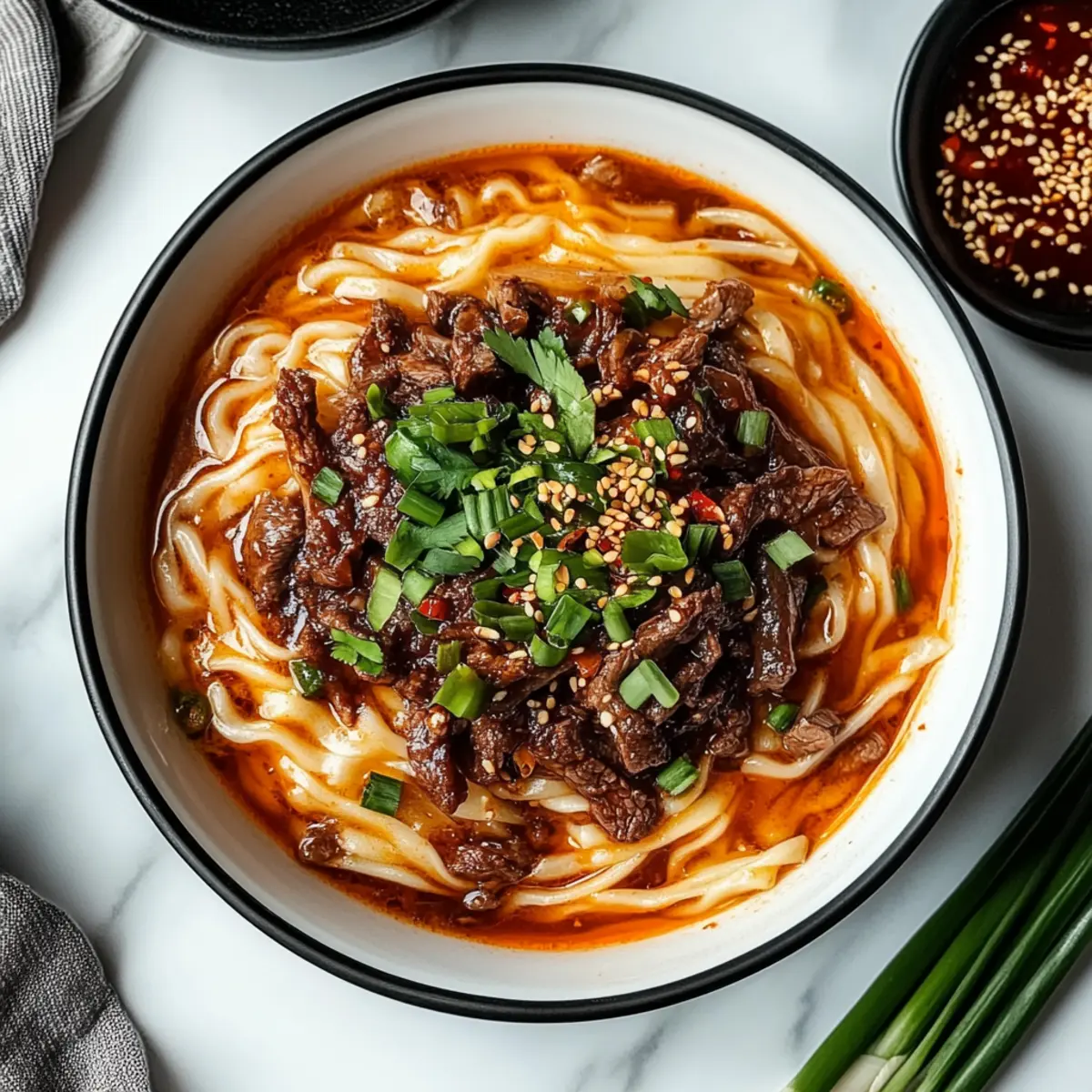
Spicy Korean Gochujang Beef Noodles That Ignite Your Taste Buds
Ingredients
Equipment
Method
- Begin by slicing the beef sirloin into thin strips for quick cooking. Mince garlic and slice onion and red bell pepper into thin pieces. Cook noodles according to package instructions, drain and set aside.
- In a large skillet, heat vegetable oil over medium-high heat. Add sliced beef in a single layer, cooking for 2-3 minutes until browned on one side. Flip and cook for another 1-2 minutes until fully browned.
- Remove beef from skillet and set aside. In the same skillet, add minced garlic and sliced onion, stirring for 1 minute until translucent. Then add sliced red bell pepper, cooking for another 3-4 minutes until tender.
- In a bowl, whisk together soy sauce, brown sugar, gochujang, sesame oil, and rice vinegar until sugar dissolves. This is the sauce for your dish.
- Return cooked beef to skillet with vegetables. Pour prepared sauce over mixture and stir well to coat. Add cooked noodles and toss thoroughly.
- Cook everything together for an additional 2-3 minutes, stirring frequently until heated throughout.
- Off heat, sprinkle with sesame seeds and chopped green onions before serving.
Leave a Reply