
With a single whiff of warm, savory broth bubbling away on the stove, I am transported to the heart of Korea, where family meals are an event filled with excitement and comfort. Today, I’m thrilled to share my Quick Korean Beef Bulgogi Stew with Glass Noodles, a dish that transforms leftovers into a hearty, one-pot meal. In just 30 minutes, this recipe combines tender marinated beef, chewy glass noodles, and earthy enoki mushrooms into a delightful stew that promises to warm your soul. Whether you’re short on time or simply craving a bowl of homey comfort food, this Korean Beef Bulgogi Stew is your answer. Plus, its adaptability means you can swap in whatever ingredients you have on hand—making it a true pantry hero. Are you ready to dive into the deliciousness?
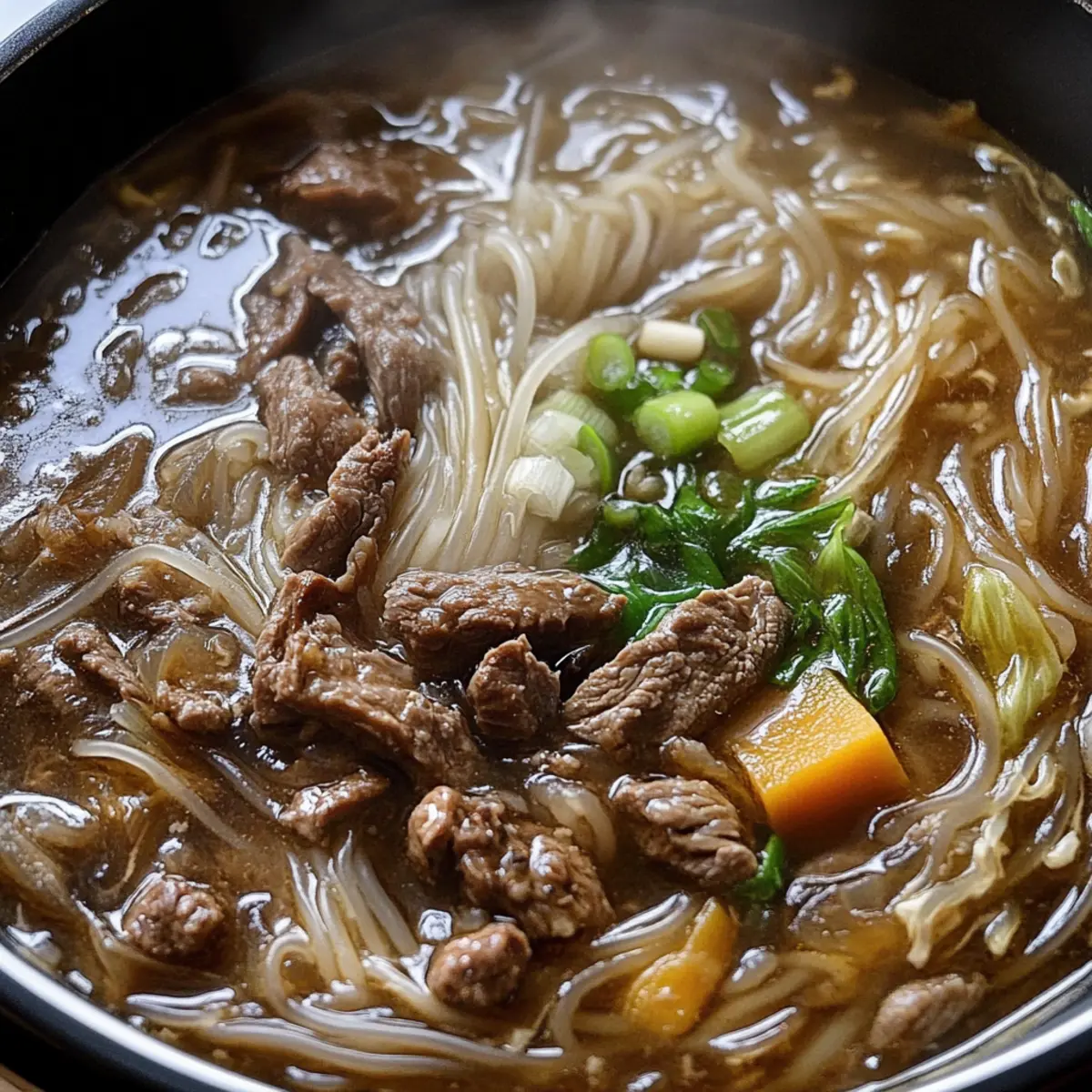
Why is this stew a must-try?
Quick and Easy: You’ll whip this dish up in just 30 minutes, making it perfect for weeknight dinners.
Flavor Explosion: The rich broth blends sweet, savory, and nutty notes, ensuring every spoonful is packed with satisfaction.
Versatile: Easily adapt with fresh ingredients or whatever you have in your pantry—consider adding carrots or bok choy for a veggie boost!
Comforting Texture: Each bite offers everything from tender beef to chewy glass noodles, creating a heartwarming experience reminiscent of traditional Korean meals.
Family-Friendly: This hearty stew is sure to please all palates, making it a fantastic choice for family gatherings or cozy nights in. For another comforting dish, check out my easy Casserole Ground Beef recipe!
Korean Beef Bulgogi Stew Ingredients
For the Stew
- Beef Bulgogi – Adds a sweet-savory note and richness to the broth; freshly marinated beef can be used if no leftovers are available.
- Sweet Potato Glass Noodles (Dangmyeon) – A chewy noodle that absorbs the broth beautifully for a satisfying texture; rice noodles, udon, or ramen can serve as great alternatives.
- Enoki Mushrooms – Contributes a subtle earthiness and crisp texture; no substitutions needed, but other mushrooms can be used if you prefer.
- Green Onions – Adds freshness and vibrant color; can be omitted or substituted with chives for a different flavor.
- Water – Base for the broth, allowing the flavors to meld; consider using beef stock for a more flavorful broth.
- Sesame Oil – Provides a nutty, warming depth to the stew; reduce the quantity for a lighter flavor if desired.
- Soy Sauce – Adds umami, saltiness, and sweetness; dark soy sauce is preferred for its richer flavor in this Korean Beef Bulgogi Stew.
Step‑by‑Step Instructions for Korean Beef Bulgogi Stew
Step 1: Soak the Glass Noodles
Begin by soaking the sweet potato glass noodles in warm water for about 15 minutes or until they become soft and pliable. This step is crucial for achieving that delightful, chewy texture that absorbs the flavors of your Korean Beef Bulgogi Stew. Once ready, drain the noodles and set them aside as you prepare the rest of the ingredients.
Step 2: Heat the Bulgogi
In a medium pot, heat over medium flame, adding your leftover beef bulgogi. Stir occasionally for about 3–5 minutes, ensuring it is heated through and fragrant. The sugars in the beef will caramelize slightly, enhancing the overall flavor of the stew. This warm base is essential to create a rich foundation for your stew.
Step 3: Add Sauces
Stir in 2 tablespoons of dark soy sauce and 1 tablespoon of sesame oil, mixing well to combine. Cook for an additional 2 minutes until the mixture is well incorporated and fragrant. The dark soy sauce will deepen the color and flavor of your Korean Beef Bulgogi Stew, while the sesame oil adds a warm, nutty aroma.
Step 4: Incorporate the Broth
Pour in 4 cups of water (or beef stock for extra flavor) and increase the heat to bring the mixture to a boil. As the liquid bubbles, use a spoon to scrape the bottom of the pot, loosening any flavorful bits stuck to the bottom. This step enriches the broth of your stew, allowing the robust flavors to meld beautifully.
Step 5: Add Noodles and Mushrooms
Once boiling, gently stir in the soaked glass noodles and 1 cup of enoki mushrooms. Cover the pot and cook for 2–3 minutes, allowing the noodles to soften and the mushrooms to become tender. You’ll know it’s ready when the noodles are pliable and the mushrooms are slightly wilted, creating a vibrant texture in your Korean Beef Bulgogi Stew.
Step 6: Garnish and Serve
After 2–3 minutes, remove the pot from heat and top your stew with chopped green onions for a burst of freshness and color. Ladle into bowls and serve hot, perhaps alongside steamed rice or traditional Korean side dishes. This final touch brightens the flavor profile of your comforting Korean Beef Bulgogi Stew, ready for everyone to enjoy!
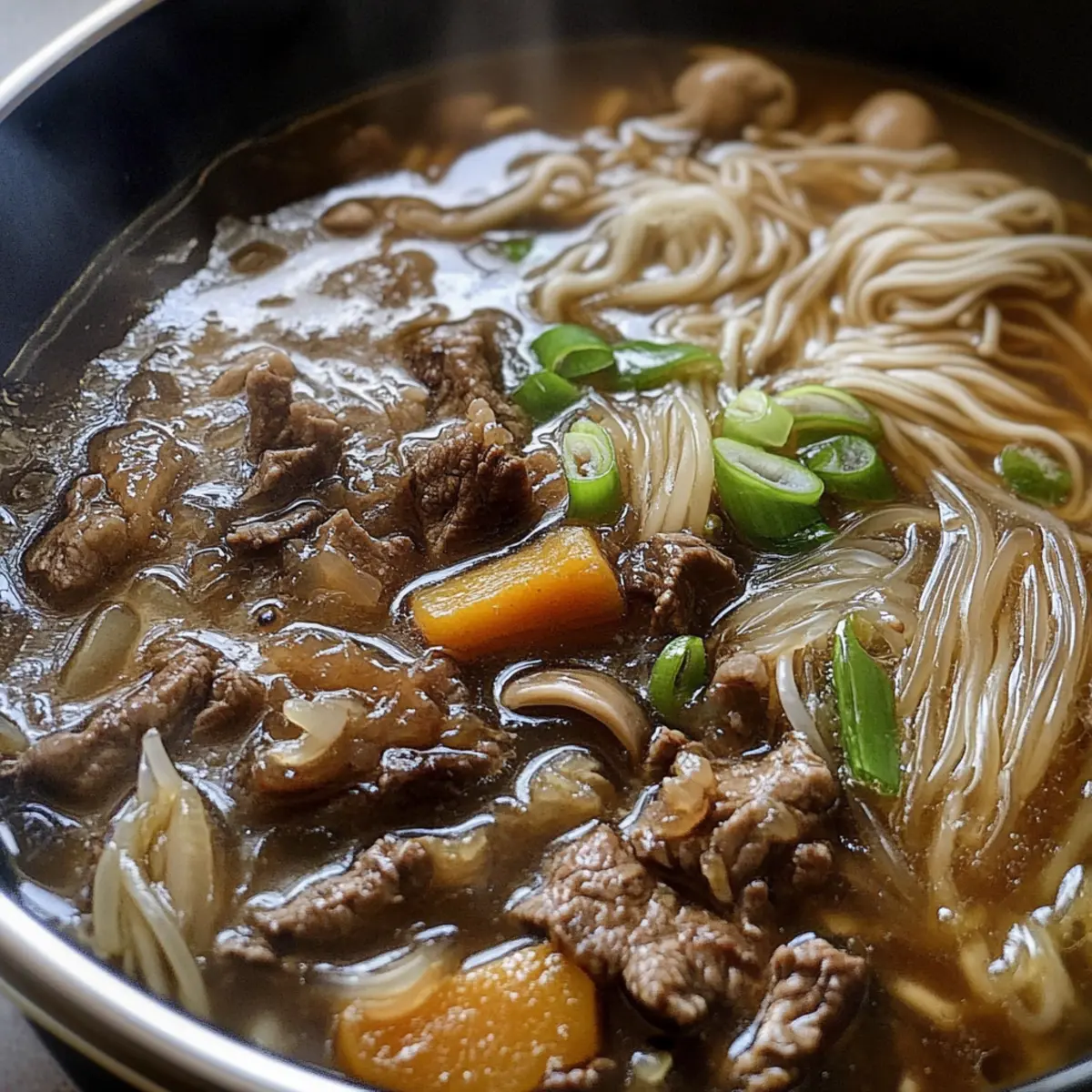
What to Serve with Quick Korean Beef Bulgogi Stew with Glass Noodles
Enhance your meal experience with these perfect pairings that elevate the comforting essence of this stew.
- Steamed Rice: Soft, fluffy rice serves as a neutral base, soaking up the rich broth and balancing flavors beautifully.
- Kimchi: This classic Korean side dish adds a spicy, tangy crunch that complements the stew’s savory depth, creating a delightful contrast.
- Seaweed Salad: Light and refreshing, this salad offers a crisp texture that harmonizes with the stew, providing a pleasant palate cleanser.
- Pickled Vegetables: A vibrant array of flavors from pickled radishes or cucumbers brightens every bite while adding a refreshing zing to the meal.
- Sliced Pears: Juicy and sweet, pear slices make a delightful accompaniment, offering a delicious contrast to the savory flavors of your stew.
- Korean Fried Chicken: Crispy and flavorful, this indulgent dish pairs perfectly with the stew’s comforting warmth, creating a satisfying feast.
- Herbal Tea: A soothing cup of ginseng or green tea complements the hearty stew, enhancing the meal’s comforting components.
- Chocolate Mousse: A light and airy dessert, this treat finishes the meal on a sweet note while keeping the balance of richness in mind.
With these thoughtful pairings, your Quick Korean Beef Bulgogi Stew will shine even brighter, making each dining experience feel extraordinary!
Korean Beef Bulgogi Stew Variations
Feel free to get creative and put your own spin on this delightful stew!
- Vegetable Boost: Add sliced bok choy or napa cabbage for extra crunch and nutrition; they’ll soak up the savory broth beautifully.
- Colorful Carrots: Include julienned carrots for a touch of sweetness and vibrant color that brightens the dish. They add a lovely contrast to the rich flavors!
- Mushroom Medley: Experiment with other mushroom varieties like shiitake or portobello for a deeper umami flavor. Each mushroom brings its unique texture and taste to the stew.
- Heat Up: Sprinkle in red pepper flakes or fresh sliced chili for a spicy kick. Adjust the heat level to suit your palate while enhancing the overall enjoyment!
- Noodle Alternatives: Swap sweet potato glass noodles for rice noodles, udon, or ramen if you prefer! These alternatives provide different textures and flavors that can elevate your dish.
- Herb additions: Toss in fresh cilantro or basil just before serving for vibrant, aromatic notes that complement the stew’s earthiness splendidly. They add a refreshing twist worthwhile!
- Stock Swap: Use homemade or store-bought beef stock instead of water for a richer, deeper flavor. This simple adjustment will make your stew taste extra special.
- Creamy Touch: Stir in a splash of coconut milk for a subtle sweetness and creaminess that rounds out the dish beautifully. Pair with Casserole Ground Beef for an extra hearty meal!
Tips for the Best Korean Beef Bulgogi Stew
- Soak Noodles Correctly: Ensure sweet potato noodles are fully soaked for at least 15 minutes to prevent toughness and achieve that perfect chewy texture.
- Taste Adjustments: Depending on how salty your beef bulgogi is, adjust the amount of soy sauce added to avoid overpowering saltiness in your Korean Beef Bulgogi Stew.
- Use Flavorful Broth: Opt for beef stock instead of water for a more robust and flavorful stew—this simple swap can make all the difference!
- Keep an Eye on Mushrooms: Enoki mushrooms cook quickly; add them at the right time to maintain their delicate texture and prevent overcooking.
- Customize Ingredients: Feel free to add other vegetables like bok choy or carrots for added nutrition and color; the recipe is adaptable to your pantry supplies!
How to Store and Freeze Korean Beef Bulgogi Stew
Fridge: Store leftover Korean Beef Bulgogi Stew in an airtight container for up to 3 days. Reheat gently on the stove or in the microwave until heated through.
Freezer: For longer storage, freeze the stew in freezer-safe containers for up to 3 months. Thaw overnight in the fridge before reheating.
Reheating: When reheating, add a splash of water or broth to prevent the noodles from becoming too soft, ensuring a flavorful experience.
Separation Tip: If freezing, consider storing the glass noodles separately to maintain their texture, adding them back in when reheating.
Make Ahead Options
These Korean Beef Bulgogi Stew ingredients are perfect for meal prep! You can prepare the sweet potato glass noodles and enoki mushrooms up to 24 hours in advance by soaking the noodles and chopping the mushrooms, then storing them in airtight containers in the refrigerator. The beef bulgogi can also be heated and mixed with the sauces up to 3 days ahead, just be sure to refrigerate it promptly after cooking to maintain quality. When you’re ready to finish the stew, simply combine the prepped ingredients in a pot with water or beef stock, bring it to a boil, and add in the noodles and mushrooms for a delicious, restaurant-quality Korean Beef Bulgogi Stew with minimal effort!
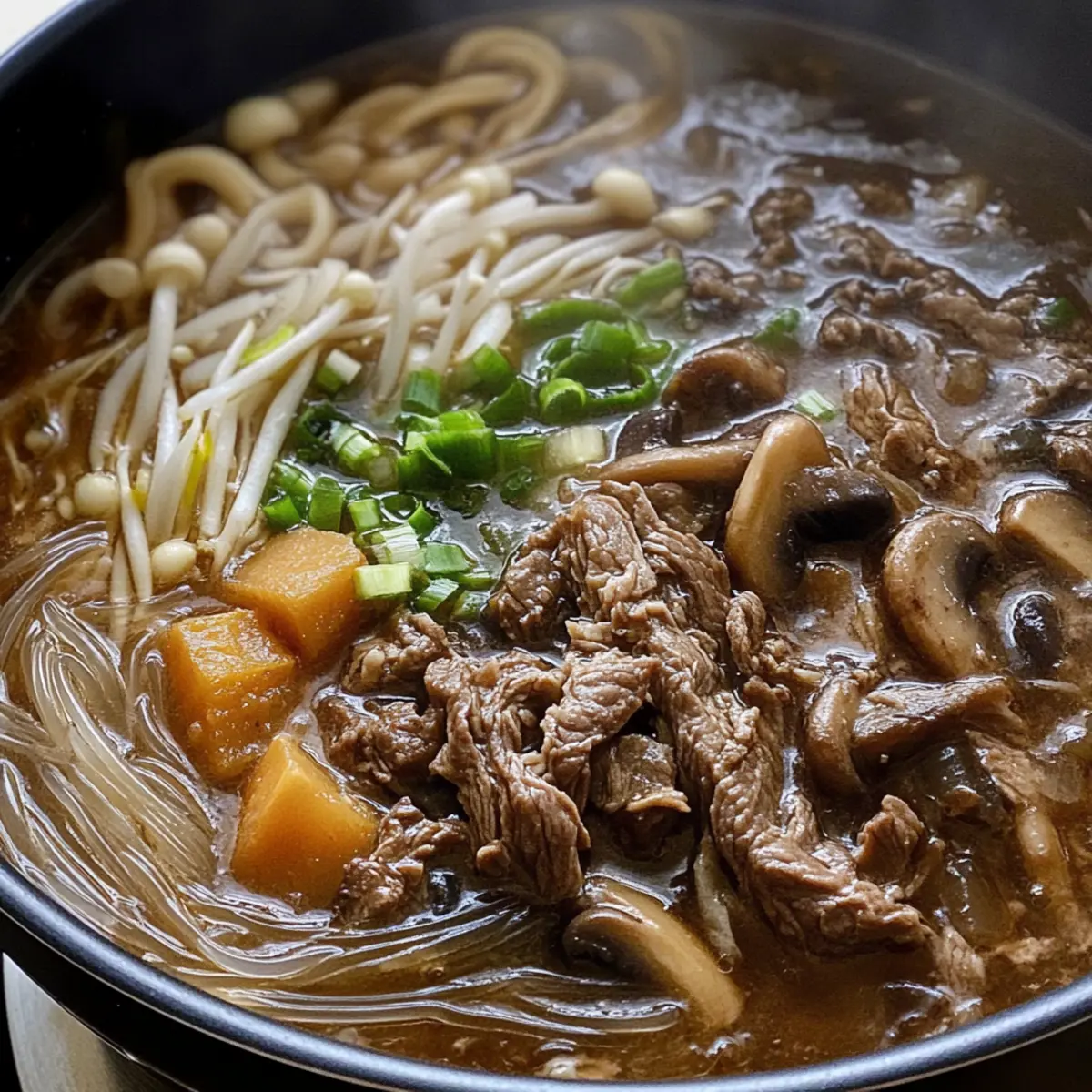
Korean Beef Bulgogi Stew Recipe FAQs
What type of beef is best for bulgogi?
Absolutely! For the best bulgogi, thinly sliced ribeye or sirloin is ideal due to its tenderness and rich flavor. If you have leftovers from a previous bulgogi dish, use them! In case you don’t have ribeye or sirloin, flank steak can be a good substitute, although it may require a bit more marinating for tenderness.
How can I store leftover Korean Beef Bulgogi Stew?
You can store leftover Korean Beef Bulgogi Stew in an airtight container in the fridge for up to 3 days. When reheating, be gentle! You can warm it on the stove over low heat or in the microwave. If you find the noodles overly soft, add a splash of broth to keep them from becoming mushy.
Can I freeze Korean Beef Bulgogi Stew?
Yes, you can freeze your Korean Beef Bulgogi Stew! Simply place it in freezer-safe containers and store for up to 3 months. To thaw, move the stew to the fridge overnight. When ready to reheat, warm it gently on the stove, adding a bit of water or broth if necessary to maintain the desired consistency.
What vegetables can I add to the stew?
Very! Feel free to customize your stew with vegetables like bok choy, napa cabbage, or carrots. If using bok choy, add it in the last couple of minutes of cooking to retain its crispness. Wash, slice, and toss them in just before serving, cooking until they’re tender yet still vibrant—this brings not only nutrition but gorgeous color to your hearty stew!
Are there any dietary considerations I should be aware of?
Definitely! If you’re cooking for someone with gluten sensitivities, consider using tamari in place of soy sauce. For a vegetarian twist, swap out beef bulgogi for marinated tofu or seitan, and use vegetable broth instead of beef stock. Always double-check ingredient labels to avoid allergens, and feel free to reach out if you have any specific dietary questions or need further recipe modifications.
How do I know if my glass noodles are properly cooked?
The more the merrier! You want your sweet potato glass noodles to be soaked until they are soft and flexible, which typically takes about 15 minutes in warm water. When you add them to the stew, they should only take 2-3 minutes to become tender—look for a chewy yet soft texture without toughness. If they become too mushy, it may indicate they were overcooked, so keep an eye on them during the final simmer!
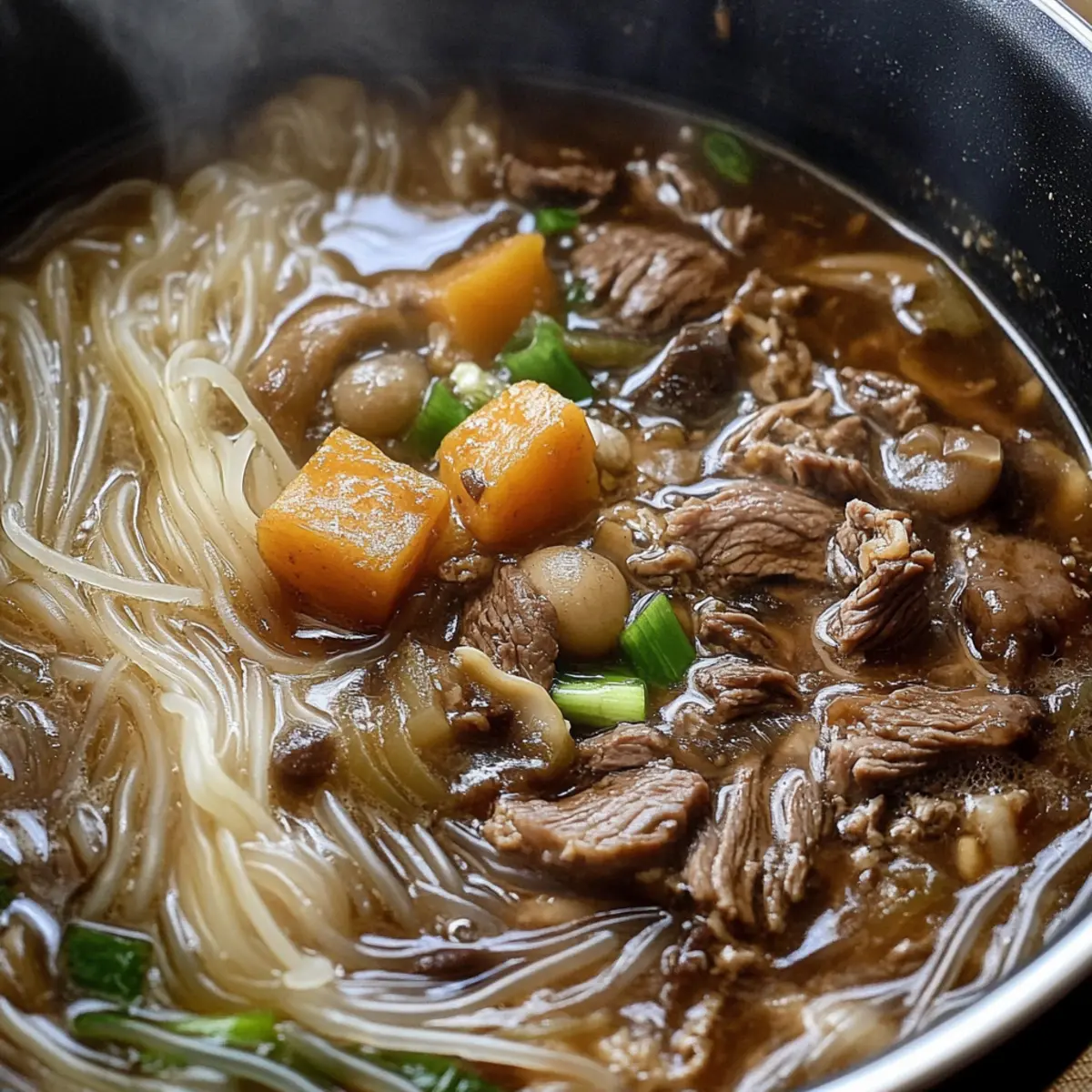
Hearty Korean Beef Bulgogi Stew Ready in 30 Minutes!
Ingredients
Equipment
Method
- Soak the sweet potato glass noodles in warm water for about 15 minutes, then drain and set aside.
- In a medium pot, heat leftover beef bulgogi over medium flame for about 3–5 minutes.
- Stir in the dark soy sauce and sesame oil, cooking for an additional 2 minutes.
- Pour in the water (or beef stock) and bring the mixture to a boil.
- Add the soaked noodles and enoki mushrooms, covering the pot and cooking for 2–3 minutes.
- Garnish with chopped green onions and serve hot.
Leave a Reply