
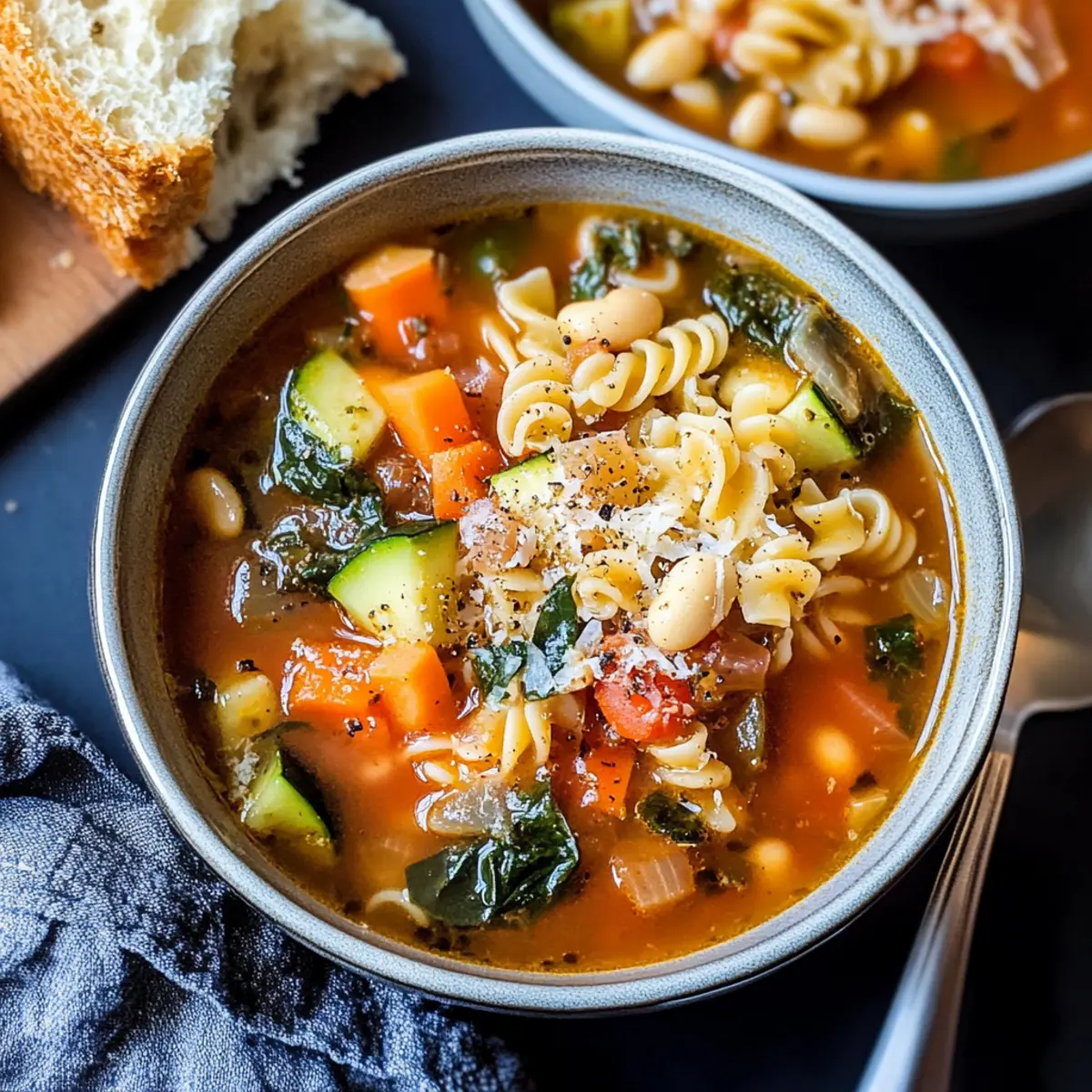
The aroma of simmering vegetables fills the kitchen, transporting me straight to a bustling Italian trattoria. Today, I’m thrilled to share my recipe for Classic Italian Minestrone Soup—a dish that encapsulates the heartwarming essence of home-cooked comfort. This vibrant soup is not only packed with fiber-rich beans and colorful veggies, but it’s also a breeze to whip up, making it a favorite on my weeknight rotation. Whether you’re looking for a satisfying meal after a long day or prepping some cozy lunches for the week, minestrone has you covered. Plus, it’s vegetarian-friendly and can easily be made gluten-free or vegan with just a few simple tweaks. Ready to dive into a bowl of warmth that nourishes both body and soul? Let’s get started!

Why is Minestrone Soup so beloved?
Comforting, Mouthwatering Flavor: Each spoonful of this minestrone soup is infused with the rich, savory essence of fresh vegetables and aromatic herbs. Quick Preparation: Perfect for busy weeknights, you can have it simmering in one pot without any fuss. Versatile: Feel free to swap in any seasonal vegetables or use gluten-free pasta—making it your own! Healthy and Nourishing: Packed with fiber-rich beans and nutrient-dense ingredients ensures you’re indulging in a wholesome dish. For further kitchen inspiration, check out my cozy Potstickers Soup Cozy or the rich French Garlic Soup for more comfort food ideas!
Minestrone Soup Ingredients
• To bring your comforting soup to life!
For the Soup Base
- White Beans – Provides protein and fiber, adding heartiness to the soup; substitute with canned chickpeas if desired.
- Chicken or Vegetable Broth – Acts as the soup base, enhancing flavor; use low-sodium varieties for a healthier option.
- Olive Oil – Adds richness and helps sauté the vegetables; can substitute with vegetable oil for a neutral taste.
- Chopped Onion – Adds sweetness and depth of flavor; shallots can be used as an alternative.
For the Vegetables
- Diced Carrots – Introduces sweetness and texture; frozen or fresh carrots are both acceptable.
- Diced Celery – Contributes crunch and flavor; leeks can replace celery in a pinch.
- Garlic – Provides aromatic flavors essential in Italian cooking; fresh garlic is recommended but can use garlic powder in a lesser quantity.
- Diced Tomatoes – Adds acidity and body to the soup; use crushed tomatoes as a substitute.
- Zucchini – Adds texture and nutrition; swap with yellow squash for variety.
- Spinach – Contributes vitamins and vibrancy; kale can serve as a substitute.
For the Seasoning
- Parmesan Cheese Rind (optional) – Enhances flavor, adding umami notes; omit for a vegan version.
- Fresh Rosemary, Bay Leaves, Basil, Parsley – Aromatic herbs that enhance the soup’s fragrance and taste; dried herbs can be used as alternatives but ensure to adjust quantities.
- Kosher Salt and Fresh Black Pepper – Essential for seasoning, giving your minestrone soup its final touch.
For the Pasta
- Cooked Small Pasta (Ditalini or Orzo) – Provides a satisfying bite; gluten-free pasta can be used for dietary needs.
Step‑by‑Step Instructions for Minestrone Soup
Step 1: Prepare Beans
Start by pureeing the white beans with 1 cup of broth in a blender until smooth, creating a creamy base for your minestrone soup. This step enhances the soup’s texture and richness. Set the pureed beans aside while you move on to the next delicious phase.
Step 2: Sauté Vegetables
In a Dutch oven, heat a generous drizzle of olive oil over medium-high heat. Once hot, add the chopped onion, diced carrots, diced celery, and minced garlic. Sauté these aromatic vegetables for about 15 minutes, or until they become tender and fragrant, creating a flavorful foundation for your hearty soup.
Step 3: Combine Ingredients
Next, pour in the remaining chicken or vegetable broth along with the diced tomatoes and your luscious pureed beans. If you’re using a Parmesan cheese rind, toss that in now for added depth of flavor. Season generously with kosher salt and fresh black pepper, and stir in the fresh rosemary and bay leaves for an aromatic touch.
Step 4: Cook Soup
Bring the minestrone soup mixture to a vigorous boil. Once boiling, cover the pot, reduce the heat to low, and let it simmer gently for about 40 minutes. This will allow all the flavors to meld beautifully while the vegetables soften, creating a comforting and hearty soup.
Step 5: Add Final Ingredients
After simmering, incorporate the diced zucchini and fresh spinach into the soup. Cover the pot again and let it simmer for an additional 8-10 minutes, until the zucchini is tender and vibrant, ensuring every spoonful of your minestrone soup is packed with fresh goodness.
Step 6: Finish and Serve
Before serving, remove the bay leaves and Parmesan cheese rind from the soup for a clean finish. Ladle the warm minestrone soup into bowls, and stir in the cooked small pasta. For an extra touch, garnish with freshly chopped parsley and a sprinkle of Parmesan cheese if desired, and prepare to enjoy a bowl of comfort!
Make Ahead Options
These delicious minestrone soup components are perfect for busy home cooks looking to save time! You can chop and prepare all the vegetables—like carrots, zucchini, and spinach—up to 24 hours in advance, storing them in an airtight container in the fridge to maintain their freshness. Additionally, you can puree the white beans and combine them with the broth a day ahead, which deepens the flavor. When you’re ready to cook, simply sauté the vegetables, add the broth and pureed beans, and simmer for about 40 minutes. By prepping your ingredients in advance, you’ll have a comforting bowl of minestrone soup ready with minimal effort after a long day!
Minestrone Soup Variations & Substitutions
Feel free to let your creativity shine by customizing this minestrone soup to match your taste and dietary needs!
- Gluten-Free Pasta: Swap traditional pasta for gluten-free options to suit your dietary preferences.
- Vegan Twist: Replace chicken broth with vegetable broth and skip the Parmesan cheese rind for a delightful vegan version.
- Protein-Packed: Add shredded rotisserie chicken or a can of chickpeas for extra protein and a heartier meal.
- Roasted Veggies: Enhance flavor by roasting vegetables like carrots and zucchini before adding them to the soup. This gives a delightful char and depth!
- Spicy Kick: For some heat, add red pepper flakes or diced jalapeños when sautéing the vegetables—warmth in every spoonful!
- Herb Variation: Experiment with different herbs like thyme or oregano instead of the traditional rosemary and basil for a unique flavor experience.
- Creamy Texture: Stir in a splash of coconut milk or heavy cream at the end for a creamy, luscious finish.
- Citrus Zing: A squeeze of fresh lemon juice just before serving brightens the flavors and adds a refreshing tang.
If you’re intrigued by other cozy recipes, why not try my Potstickers Soup Cozy next? Or for a lovely twist on a classic, check out my One-Pot Lasagna Soup!
Helpful Tricks for Minestrone Soup
- Use Fresh Ingredients: Fresh vegetables enhance the flavor significantly. Always opt for seasonal produce whenever possible to elevate your minestrone soup.
- Mind the Pasta: If you plan to have leftovers, cook the pasta separately. This prevents it from becoming mushy in the soup over time.
- Enhance with Herbs: Fresh herbs make a world of difference! Add them at the end of cooking for maximum flavor. Dried herbs work too; just remember to adjust the quantity.
- Balance the Broth: For a rich flavor, make sure to taste and season the broth appropriately. A good balance of kosher salt and fresh black pepper is essential for your minestrone soup.
- Cold Storage Tips: When storing, allow the soup to cool completely before placing it in airtight containers. This keeps it fresh for up to four days in the refrigerator.
What to Serve with Hearty Minestrone Soup
Let your homemade minestrone soup shine as the comforting centerpiece of a delightful meal, perfectly accompanied by wholesome sides.
- Crusty Bread: The ultimate pairing! Use it to soak up the rich broth, making each bite a heavenly experience.
- Garlic Breadsticks: Crispy on the outside and soft in the middle, these breadsticks add a delightful flavor and texture, perfect for dipping.
- Simple Green Salad: A fresh salad of mixed greens, cherry tomatoes, and a light vinaigrette provides a crisp contrast, awakening your taste buds with every bite.
- Roasted Vegetables: Seasoned and caramelized, these velvety vegetables complement the minestrone’s flavors while adding a healthy touch to your meal.
- Parmesan Crisps: These crunchy cheese dippers are a fantastic snack alongside your soup, adding a savory crunch that balances the creamy texture.
- Wine Pairing: A light Italian red, such as Chianti, will elevate the experience, beautifully complementing the rich flavors of the minestrone.
- Fruit Sorbet: A refreshing finish to your meal, a scoop of fruit sorbet will cleanse your palate after that cozy, hearty soup.
- Olive Oil Drizzle: A finishing touch—drizzle some high-quality olive oil over your soup before serving for added richness and flavor.
- Stuffed Peppers: Serve alongside for a hearty meal; their filling contrasts wonderfully with the soup’s lightness.
Storage Tips for Minestrone Soup
Fridge: Store the minestrone soup in an airtight container for up to 4 days. Make sure it cools completely before refrigeration to maintain flavor and quality.
Freezer: If you’d like to enjoy your minestrone soup later, freeze it in portions for up to 3 months. Cool completely, then store in freezer-safe containers, remembering to leave some space for expansion.
Reheating: When you’re ready to enjoy your frozen minestrone, thaw it in the fridge overnight. Reheat gently on the stove over low heat, adding a splash of broth for the best texture.
Pasta Storage: If you plan to freeze your minestrone, consider keeping the cooked pasta separate. This prevents it from getting soggy when reheated, ensuring each bowl is as delightful as the first.

Minestrone Soup Recipe FAQs
How do I select ripe vegetables for my Minestrone Soup?
Absolutely! For the best flavor, select firm vegetables that are free from blemishes. Look for fresh, vibrant colors—carrots should be bright orange, zucchini should be glossy, and tomatoes should have a rich red hue. Avoid any with dark spots or wrinkling, as these may indicate overripeness.
What is the best way to store leftover Minestrone Soup?
Very! After letting your soup cool to room temperature, transfer it to airtight containers. It will stay fresh in the refrigerator for up to 4 days. Be sure to label the container with the date so you can keep track of its freshness.
Can I freeze Minestrone Soup?
Absolutely! To freeze your soup, allow it to cool completely, then pour it into freezer-safe containers or bags, leaving some headspace for expansion. It can last for up to 3 months in the freezer. When you’re ready to enjoy it again, thaw it in the refrigerator overnight and reheat on the stove, adding a splash of broth to restore its texture.
Why does my Minestrone Soup taste bland?
Commonly, blandness can be caused by insufficient seasoning. Ensure you’re generously seasoning with kosher salt and freshly cracked black pepper—it makes all the difference! Taste the broth before serving and adjust accordingly. You can also enhance flavor by incorporating fresh herbs at the end of cooking!
Is this Minestrone Soup safe for those with allergies?
Yes! This recipe is vegetarian and can be made vegan by omitting the Parmesan cheese rind. Always check the labels on your broth and pasta for any allergens, particularly gluten if using regular pasta. If cooking for someone with specific dietary restrictions, consider variations like gluten-free pasta or using plant-based ingredients to avoid any potential allergens.
How can I modify the soup to include more protein?
I often suggest adding cooked chicken or extra beans for additional protein. If you go for beans, consider incorporating cannellini, kidney, or even lentils for a nice twist! You can add them during the last 10 minutes of cooking to warm through without overcooking.

Hearty Minestrone Soup - A Comforting Italian Classic
Ingredients
Equipment
Method
- Start by pureeing the white beans with 1 cup of broth in a blender until smooth.
- In a Dutch oven, heat a drizzle of olive oil over medium-high heat. Add the chopped onion, diced carrots, diced celery, and minced garlic; sauté until tender.
- Pour in the remaining broth along with the diced tomatoes and pureed beans. Add cheese rind if using, and season with salt, pepper, rosemary, and bay leaves.
- Bring to a boil, then reduce heat and let simmer for about 40 minutes.
- Incorporate the diced zucchini and fresh spinach, cover, and let simmer for an additional 8-10 minutes.
- Remove bay leaves and cheese rind. Ladle into bowls, stir in pasta, and garnish as desired.
Leave a Reply