
As I stood in the kitchen, the delicate scent of stir-frying vegetables mixed with a hint of soy sauce whisked me back to a vibrant street market in Seoul, where every food stall seemed to tell a story. Japchae, the beloved Korean glass noodle stir-fry, quickly became a favorite of mine with its chewy sweet potato noodles and colorful array of veggies. This easy recipe is not only a magnet for delicious flavors but also incredibly customizable—perfect for any dietary preference, whether you’re a meat lover or lean more towards vegetarian or vegan diets. It’s the kind of dish that brings family and friends together, making everyday meals feel like special occasions. So, are you ready to whip up a mouthwatering plate of Japchae that’s sure to impress?
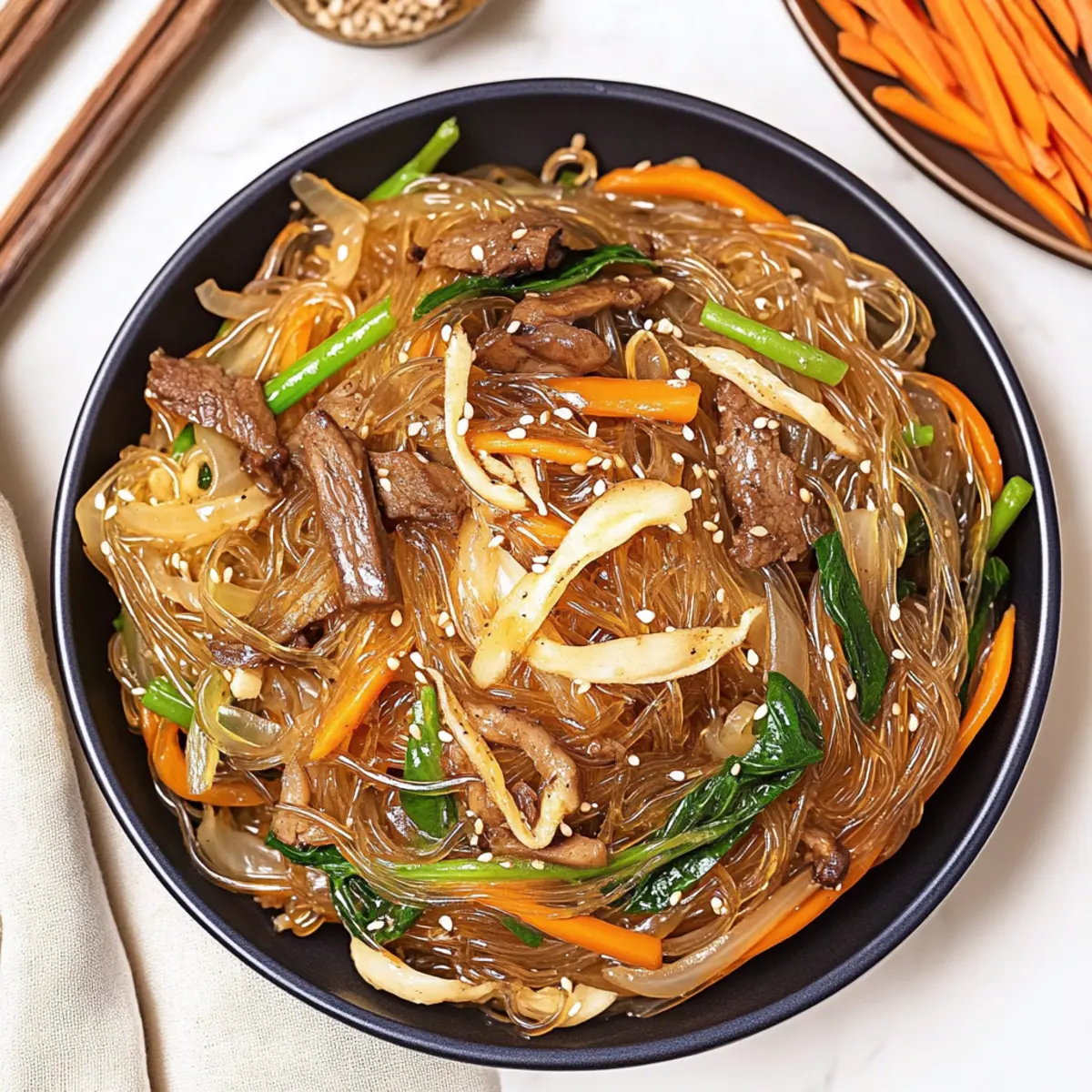
Why should you try Japchae today?
Easy, Customizable Recipe: Japchae is a breeze to whip up, allowing you to personalize it with your favorite proteins and vegetables. Flavor Explosion: The perfect balance of sweet and savory flavors, enhanced by a dash of soy sauce and toasted sesame oil, makes every bite unforgettable. Health Benefits: Packed with nutrients from colorful veggies and the option to go vegan, it’s a guilt-free indulgence. Versatile Dish: Whether it’s a family dinner or a festive gathering, this dish adapts beautifully to any occasion. Finally, try serving it with sides like kimchi for a true Korean experience!
Japchae Ingredients
Explore how to bring this delightful dish to life with these essential ingredients!
-
For the Noodles
• Sweet Potato Glass Noodles – The star of the dish, providing unique bounciness and texture; look for “sweet potato starch noodles” for the best results. -
For the Protein
• Beef or Pork (16 ounces) – Adds richness and depth to the dish, but don’t hesitate to swap it out for tofu if you’re aiming for a vegetarian option! -
For the Eggs
• Eggs (2 large) – These help bind the ingredients together and enrich the flavors; you can omit them for a vegan Japchae. -
For the Vegetables
• Carrot (1 large, julienned) – Adds sweetness and a pop of color; feel free to use bell peppers if you desire a crunchy twist.
• Yellow Onion (1 medium, thinly sliced) – Enhances flavor depth; substitute with green onions for a brighter taste.
• Mushrooms (3, any variety, thinly sliced) – Infuses umami flavor into the dish; shiitake mushrooms work wonders if available.
• Baby Spinach (2 cups, packed) – Brings valuable nutrients and vibrant color to your Japchae; kale can be a perfect alternative.
• Green Onion (2 stalks, cut into 1-inch pieces) – Lends a fresh crunch; optional to omit if you don’t have any on hand. -
For Cooking
• Cooking Oil – Ideal for sautéing; you can use vegetable oil, olive oil, or sesame oil based on your preference. -
For Garnishing
• Toasted Sesame Seeds – A delightful touch that not only enhances presentation but also flavors; optional but recommended! -
For Seasoning
• Salt and Black Pepper – Essential for adjusting flavor to your liking; season to taste!
• Soy Sauce (7 tablespoons, light sodium) – Imparts that classic savory depth; if you need a gluten-free option, tamari works beautifully.
• Honey (3 tablespoons) or Brown Sugar (2 tablespoons) – Sweetness balances the savory elements; vegans can substitute with agave syrup.
• Toasted Sesame Oil (2 tablespoons) – Adds a layer of richness and depth to the dish; can be left out for a lighter flavor.
With these key ingredients at your fingertips, you’re well on your way to crafting a fantastically flavorful Japchae that will surely impress—and delight!
Step‑by‑Step Instructions for Japchae
Step 1: Prepare Japchae Sauce
In a mixing bowl, whisk together 7 tablespoons of soy sauce, 3 tablespoons of honey or 2 tablespoons of brown sugar, and 2 tablespoons of toasted sesame oil. Ensure the ingredients are well combined, creating a savory and slightly sweet sauce that will coat the delicious elements of your Japchae. Set this mixture aside for later use.
Step 2: Cook Noodles
Bring a large pot of water to a rolling boil and add the sweet potato glass noodles. Cook them for 10–15 minutes until they are tender and chewy, stirring occasionally to prevent sticking. Once cooked, drain the noodles and rinse them under cold water to stop the cooking process and maintain their bouncy texture.
Step 3: Make Egg Crepe
In a non-stick skillet, heat a teaspoon of cooking oil over medium heat. Pour in 2 beaten eggs, swirling the pan to create an even layer. Cook until the egg is set and lightly golden on both sides, about 2-3 minutes per side. Remove from the pan and slice the egg crepe into thin strips to add a delightful richness to your Japchae.
Step 4: Sear Meat
In the same skillet, add a splash of oil if necessary and increase the heat to medium-high. Sear 16 ounces of thinly sliced beef or pork for about 3-4 minutes, seasoning with salt and pepper while cooking. Once the meat is browned and cooked through, remove it from the pan and set aside, allowing the flavors to mingle later on.
Step 5: Cook Vegetables
Lower the heat slightly and add a bit more oil to the skillet. Start with the onions and cook them for 2-3 minutes until they become translucent. Next, add the julienned carrot and mushrooms, sautéing for another 3-4 minutes until the vegetables are tender yet still vibrant. Finally, toss in 2 cups of baby spinach, and cook just until wilted, about 1 minute.
Step 6: Assemble Japchae
Return the cooked noodles to the skillet with the sautéed vegetables. Pour the prepared sauce over the mixture and add the seared meat and sliced egg crepe. Toss everything together gently for about 2-3 minutes, allowing the noodles and ingredients to absorb the flavors, creating a beautifully mixed Japchae.
Step 7: Serve
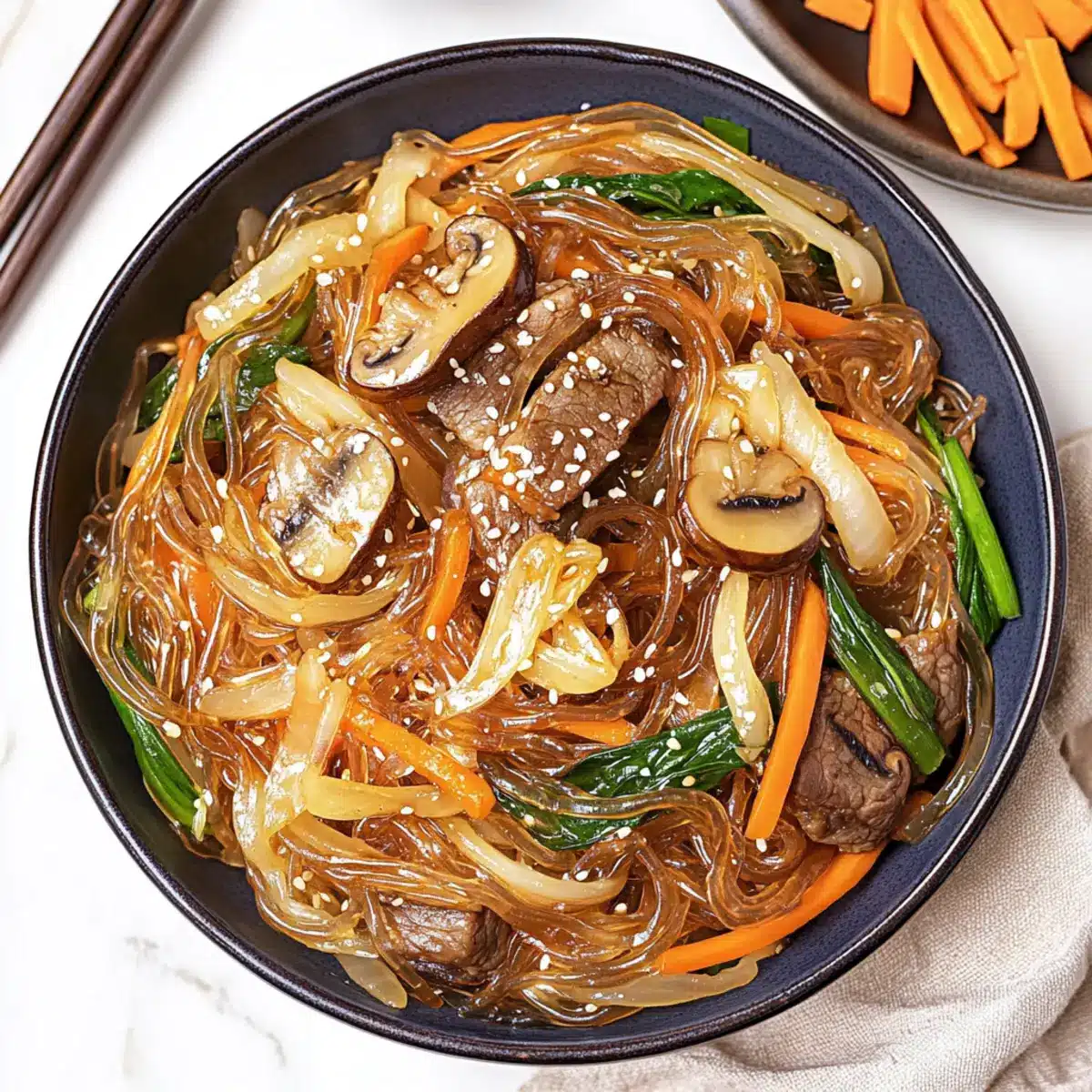
Transfer the vibrant Japchae to a serving platter, garnishing with toasted sesame seeds for added texture and flavor. This dish can be enjoyed warm or at room temperature, making it a versatile and inviting option for any meal, whether a cozy family dinner or a festive gathering.
Make Ahead Options
Japchae is an ideal dish for meal prep, allowing you to savor its delicious flavors without the last-minute rush! You can prepare the sweet potato glass noodles and sautéed vegetables up to 24 hours in advance. Simply cook and then refrigerate the noodles, and keep the sautéed veggies in a separate container to maintain their crispiness. When you’re ready to serve, stir-fry the prepped components, add your protein (meat or tofu), and pour in your prepared sauce. This way, you’ll have a delightful, homemade Japchae ready in just minutes, making dinner on busy nights a breeze!
Japchae: Exciting Customizations for Your Dish
Feel free to unleash your creativity and make Japchae truly yours with these delightful variations!
-
Vegetarian Delight: Swap the beef or pork for tofu or tempeh, perfect for a plant-based twist that retains its satisfying texture and flavor.
-
Veggie-packed: Add in your favorite fresh vegetables like bell peppers, zucchini, or snow peas for an extra crunch and vibrant color. The more, the merrier!
-
Spicy Kick: For an adventurous taste, mix in gochujang (Korean chili paste) with the sauce, transforming your Japchae into a fiery delight. Feel the warmth and love!
-
Noodle Variation: Try using other types of noodles like rice noodles or even zucchini noodles for a gluten-free option that’s equally tasty and unique.
-
Nutty Flavor: Incorporate chopped peanuts or cashews to add a delightful crunch and nutty flavor, elevating each bite. It’s like a party in your mouth!
-
Mushroom Medley: Experiment with different types of mushrooms such as shiitake or portobello for a woodsy umami flavor that dances on your palate.
-
Protein Options: Switch it up with shrimp or chicken, perfect for those who enjoy a meaty texture along with their noodles. The choices are endless!
For a true Korean experience, consider serving your Japchae alongside kimchi or even some pickled vegetables. Trust me, you’ll fall head over heels for these delightful combinations!
How to Store and Freeze Japchae
-
Room Temperature: It’s best to avoid leaving Japchae out at room temperature for more than 2 hours to prevent spoilage.
-
Fridge: Store leftovers in an airtight container in the refrigerator for up to 3 days. Reheat gently on the stovetop or in the microwave, adding a splash of water to revive the noodles.
-
Freezer: If you want to save Japchae for longer, freeze it in an airtight container for up to 2 months. Thaw in the fridge before reheating for the best texture.
-
Reheating: When ready to enjoy your frozen Japchae, reheat it in a pan over low heat, adding a tiny bit of water or broth to restore moisture.
Expert Tips for Japchae
-
Noodle Prep: Rinse cooked noodles in cold water to maintain their bouncy texture and prevent sticking. This is a crucial step in achieving perfect Japchae.
-
Veggie Order: Sauté the hardest vegetables, like onions and carrots, first, followed by softer ones like spinach. This ensures even cooking and texture balance.
-
Seasoning Wisely: Be mindful of adding salt to the dish. The soy sauce is already salty, so taste as you season and adjust accordingly to avoid overpowering the flavors.
-
Protein Flexibility: Feel free to switch up proteins! Use chicken, shrimp, or tofu depending on your preference, accommodating for diverse dietary needs while ensuring a delightful Japchae.
-
Garnish for Impact: Never skip the toasted sesame seeds! They not only add flavor but also elevate the presentation, making your dish truly appetizing.
What to Serve with Japchae?
Imagine a beautifully curated meal where the colorful vibrancy of your Japchae shines among complementary bites that enhance its delicious flavors.
- Kimchi: This classic Korean side dish adds a spicy and tangy punch, perfectly balancing the sweetness of the Japchae.
- Cucumber Salad: Crunchy and refreshing, a simple cucumber salad helps cleanse the palate with its bright flavors.
- Steamed Rice: A comforting base for the flavorful Japchae, serving it over rice creates a satisfying dining experience.
- Grilled Tofu Skewers: For a protein-packed and vegetarian-friendly option that grilled tofu adds lovely smokiness, pairing wonderfully with the stir-fried noodles.
- Sesame Spinach: Complement the meal with a quick sauté of spinach tossed in sesame oil, which mirrors the flavors of the main dish.
- Sweet Potato Wedges: Roasted sweet potato wedges bring a natural sweetness and earthy flavor that harmonizes beautifully with the noodles.
- Miso Soup: A warm bowl of miso soup can be the perfect starter, enhancing the Japanese culinary experience alongside your Japchae.
- Chilled Soba Noodles: These cold noodles provide an alternative texture and flavor, dressing them lightly with soy sauce or sesame oil.
- Asian Pear Dessert: End the meal on a light note with this sweet and refreshing fruit that contrasts the savory main course.
Japchae Recipe FAQs
What type of sweet potato glass noodles should I use?
Absolutely! Look for “sweet potato starch noodles” labeled in Asian markets or the international aisle of your grocery store. These noodles provide the perfect chewy texture that makes Japchae truly special.
How should I store leftover Japchae?
I recommend placing leftovers in an airtight container in the refrigerator for up to 2-3 days. When reheating, a splash of water in the microwave or on the stovetop prevents the noodles from drying out, keeping that delightful texture intact.
Can I freeze Japchae, and if so, how?
Yes, you can freeze Japchae for up to 2 months! First, let it cool to room temperature. Then, place it in an airtight container, ensuring no air remains inside. To reheat, thaw it in the fridge overnight and warm it in a pan over low heat with a bit of water to restore moisture.
What if my noodles are sticky after cooking?
Very! If your noodles are sticky, you might not have rinsed them thoroughly after boiling. Always rinse cooked noodles under cold water to halt cooking and remove excess starch. For next time, after cooking, toss them with a little oil to minimize stickiness.
Are there any dietary considerations for pets or allergies in this recipe?
Absolutely! Ensure you’re mindful of any allergies when preparing Japchae. Common allergens include soy (in the soy sauce) and eggs. If you’re cooking for pets, it’s best to avoid giving them this dish, especially because of the seasoning and potential harmful ingredients like onions.
Can I make a vegan version of Japchae?
Definitely! For a vegan Japchae, simply omit the eggs and substitute the meat with tofu or tempeh. Use agave syrup instead of honey for the sauce, and feel free to load up on your favorite veggies to make it even more colorful and nutritious.
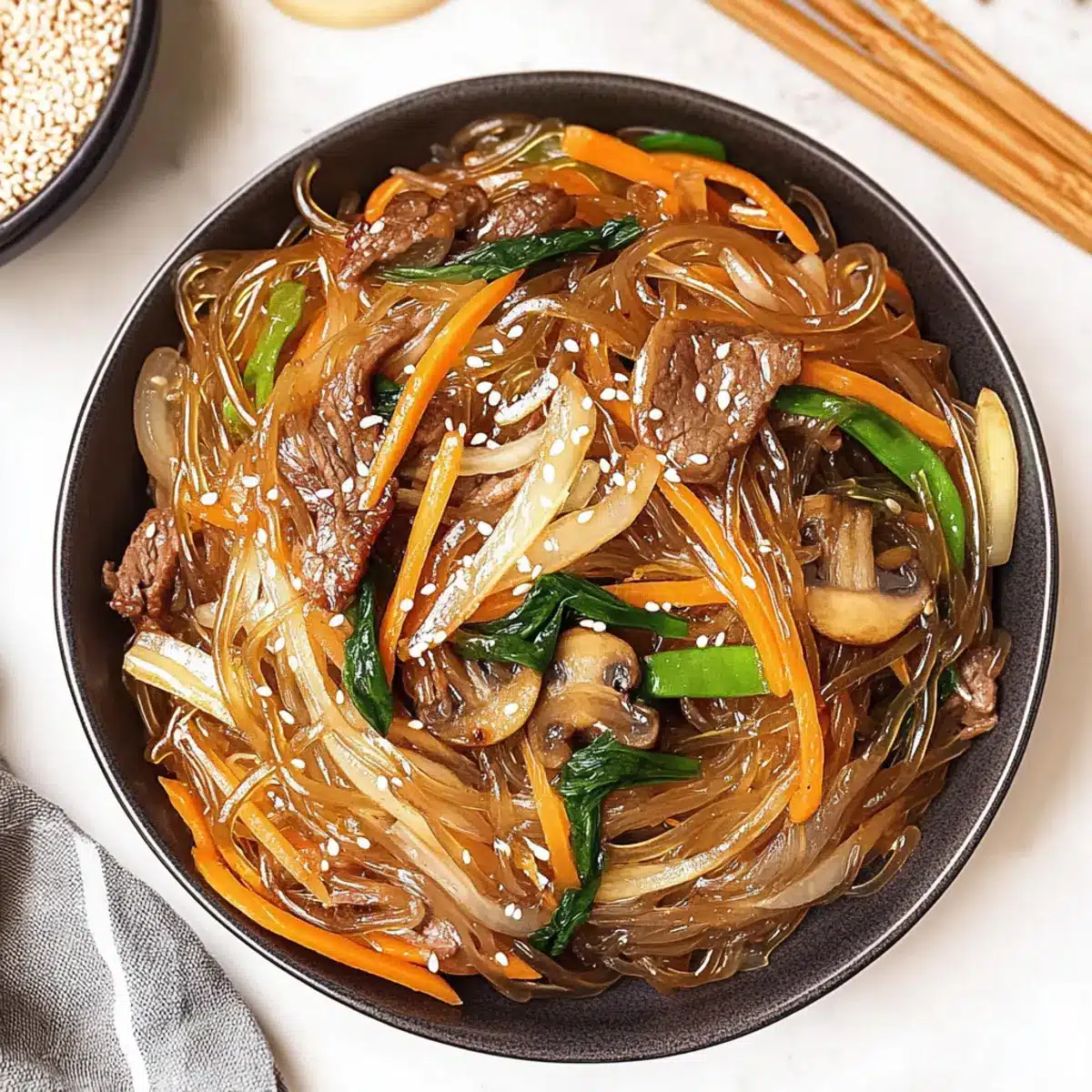
Japchae: Your New Favorite Twist on Korean Noodle Stir Fry
Ingredients
Equipment
Method
- In a mixing bowl, whisk together soy sauce, honey or brown sugar, and toasted sesame oil.
- Bring a large pot of water to a boil and add the sweet potato glass noodles. Cook until tender and chewy, then drain and rinse under cold water.
- In a skillet, heat cooking oil and pour in beaten eggs, swirling to create an even layer. Cook until set and slice into strips.
- Add oil if necessary and sear thinly sliced beef or pork in the skillet for about 3-4 minutes, seasoning with salt and pepper.
- Sauté onions in the skillet for 2-3 minutes, add carrot and mushrooms, then add spinach and cook until wilted.
- Return cooked noodles to the skillet with sautéed vegetables. Pour the prepared sauce over and add the meat and egg strips. Toss gently.
- Transfer the Japchae to a serving platter and garnish with toasted sesame seeds.
Leave a Reply