
As I stood in my kitchen, the fragrant aroma of stir-frying vegetables danced through the air, instantly transporting me to a bustling street market in Seoul. Today, I’m excited to share my favorite Japchae recipe—a classic Korean dish that comes alive with chewy sweet potato noodles, vibrant veggies, and your choice of protein, be it tender beef, chicken, or even tofu. One of the wonderful things about Japchae is its quick prep time, making it the perfect solution for busy weeknights or spontaneous gatherings. Not only is it a crowd-pleaser, but it’s also highly customizable to suit any dietary preference, keeping every palate happy. Are you ready to whip up this delightful dish and impress your loved ones with the flavors of Korea? Let’s get cooking!
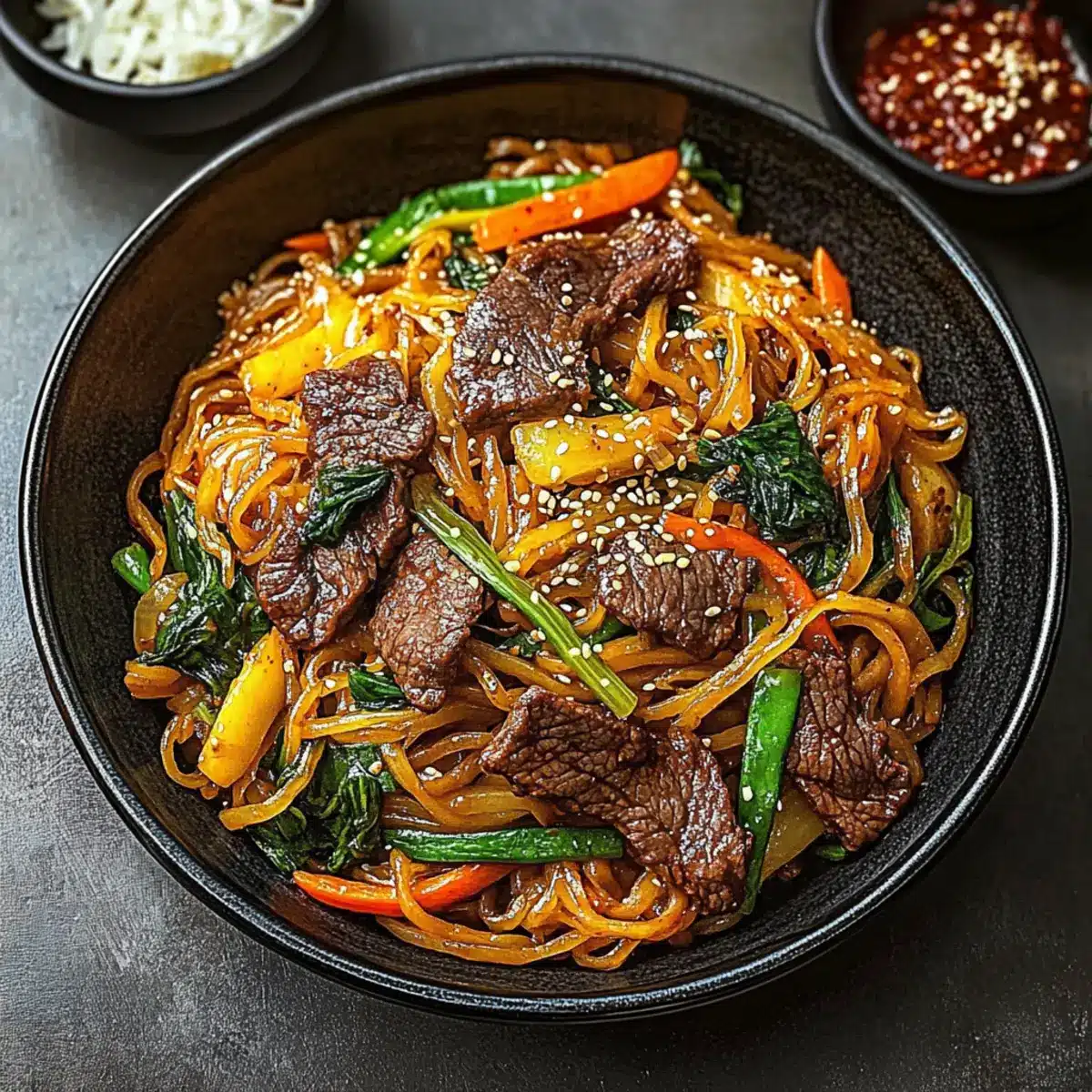
Why is Japchae the ultimate comfort food?
Irresistible Flavor: Japchae is a delightful balance of sweet and savory, with a unique blend of soy sauce and sesame oil that enchants every taste bud.
Easy Customization: This recipe can easily accommodate different proteins like beef, chicken, or tofu, allowing everyone to create their perfect bowl.
Quick Prep Time: With a prep time that fits into even the busiest schedules, you can serve up this delicious dish in under an hour.
Colorful Veggies: The vibrant mix of seasonal vegetables not only adds nutritional value but also makes your plate visually appealing, a feast for the eyes as well as the palate.
Perfect for Sharing: Whether it’s a family dinner or a casual gathering, Japchae brings everyone together, making it a must-have for any occasion.
Elevate your dinner game, and don’t forget to check out my variations for even more tasty ideas!
Japchae Ingredients
For the Noodles
• Sweet Potato Noodles – The star of this dish, these chewy glass noodles, or “dangmyeon,” are gluten-free and provide a satisfying texture.
For the Protein
• Beef – Adds rich flavor and protein; feel free to swap it out for chicken or tofu for a different protein option.
For the Vegetables
• Carrots – Thinly sliced for a slight crunch and a pop of color; they’re sweet and nutritious!
• Spinach – Adds vibrant green and is packed with vitamins; you can also use other leafy greens.
• Bell Peppers – Their colorful addition brightens the dish and offers a satisfying bite; choose any color you like.
For Seasoning
• Soy Sauce – The key ingredient for depth and umami; opt for low-sodium soy sauce for a lighter flavor profile.
• Sesame Oil – Infuses a nutty aroma essential for authentic taste; olive oil can be used in a pinch.
For Garnish
• Green Onions – Chopped for a fresh finishing touch; they’re a great substitute for chives if preferred.
Let’s bring the flavors of Japchae into your home, where every bite tells a story!
Step‑by‑Step Instructions for Japchae
Step 1: Prep the Noodles
Start by soaking the sweet potato noodles in a bowl of hot water for about 30 minutes until they become soft and pliable. This step is essential for achieving the perfect chewy texture that Japchae is known for. Once softened, drain the noodles and set them aside for later use.
Step 2: Prepare the Beef
While the noodles are soaking, slice your beef thinly against the grain for tenderness. Heat a tablespoon of oil in a large skillet or wok over medium-high heat. Add the sliced beef and stir-fry for about 4-5 minutes, or until it’s nicely browned and cooked through. Once done, remove the beef from the pan and set it aside.
Step 3: Stir-Fry the Vegetables
In the same pan where you cooked the beef, add a drizzle more oil and toss in your prepared vegetables—carrots, bell peppers, and spinach. Stir-fry them for about 3-4 minutes until they are vibrant and just tender but still crisp. The colorful medley will enhance the overall appeal of your Japchae.
Step 4: Combine All Ingredients
Return the cooked beef to the pan with the stir-fried vegetables. Add the softened sweet potato noodles, then drizzle in the soy sauce and sesame oil. Careful to coat everything evenly, gently toss and stir-fry the mixture for another 2-3 minutes until everything is heated through and well-combined, creating a harmonious blend of flavors.
Step 5: Garnish and Serve
Once combined, turn off the heat and garnish your delicious Japchae with chopped green onions for a fresh touch. Serve immediately while it’s warm, and enjoy the delightful textures and flavors. This dish is perfect as a main course or a delightful side to your favorite grilled meats.
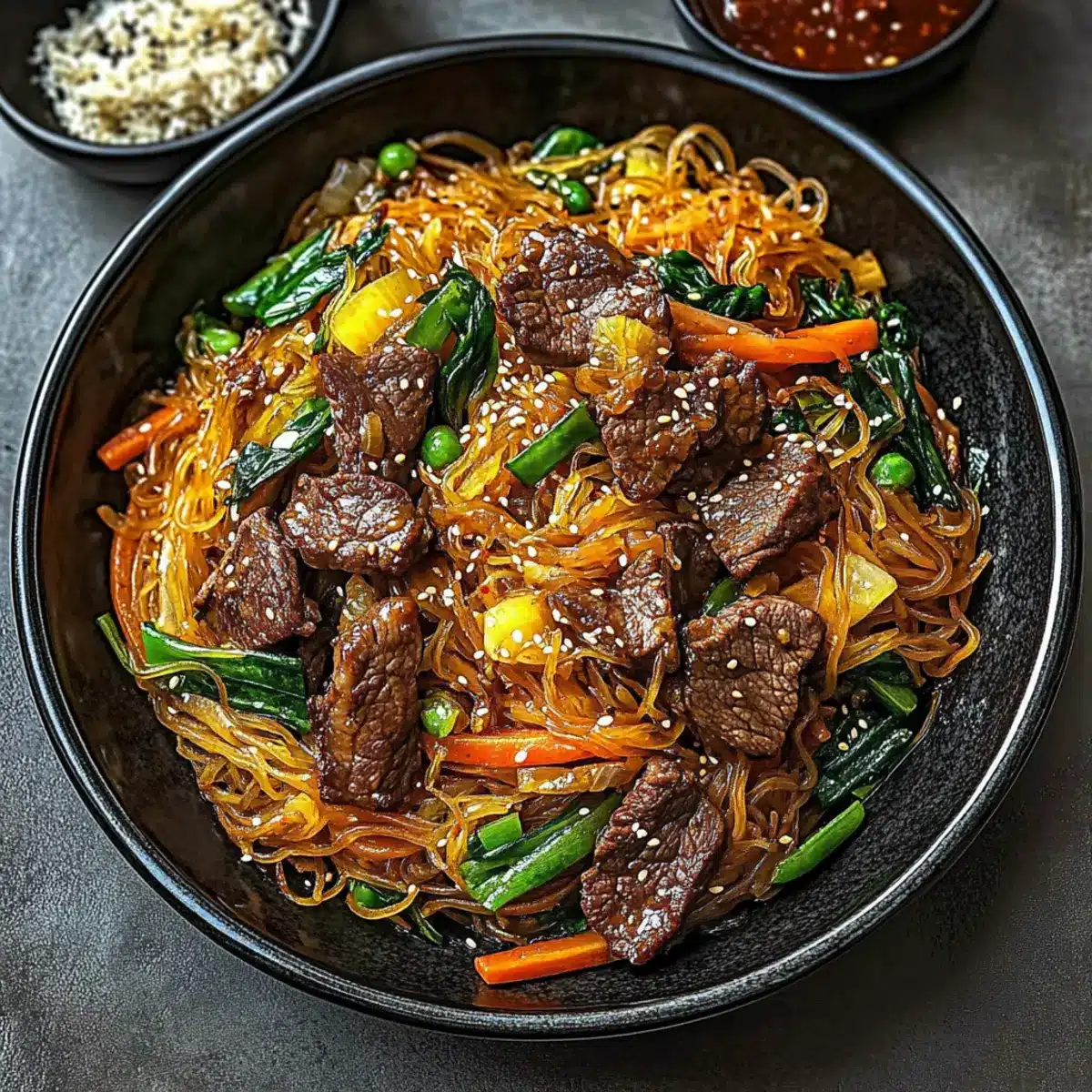
How to Store and Freeze Japchae
Fridge: Store leftover Japchae in an airtight container for up to 3 days. This keeps the flavors fresh while making it easy to reheat.
Freezer: If you want to make Japchae ahead, freeze it in portion-sized containers for up to 2 months. Just be mindful that the noodles may become a bit softer upon thawing.
Reheating: To reheat, gently warm Japchae in a skillet over medium heat with a splash of water or soy sauce to revive its moisture and prevent sticking.
Airtight Packaging: Always ensure your Japchae is well-wrapped or stored in airtight containers to keep everything delicious and prevent freezer burn.
Expert Tips for Making Japchae
- Noodle Texture: Avoid overcooking the sweet potato noodles; they should remain chewy. Soaking them properly ensures the right texture when stir-fried.
- Prep First: Have all your ingredients sliced and ready before you start cooking. Japchae cooks quickly, so this will prevent any last-minute scrambling.
- Flavor Boost: For a deeper flavor in your Japchae, consider marinating the protein in the soy sauce for a short time before cooking; it adds an extra layer of taste.
- Vegetable Variety: Experiment with your favorite seasonal vegetables to keep the dish fresh and exciting. Always tailor it to what you have on hand!
- Heat Control: Cook on high heat to achieve that lovely slight char on your vegetables, enhancing their taste while maintaining a crisp texture.
- Spice It Up: If you enjoy heat, consider adding gochujang or fresh chili peppers during the stir-fry for a pleasant kick in your Japchae.
Make Ahead Options
These Japchae noodles are perfect for meal prep enthusiasts! You can soak and prepare the sweet potato noodles and chop the vegetables up to 24 hours in advance. Store them in airtight containers in the refrigerator to maintain freshness. The cooked beef can also be prepped and refrigerated for up to 3 days. When you’re ready to serve, simply stir-fry the vegetables and beef in a hot pan, then add the soaked noodles along with soy sauce and sesame oil. Toss everything together until heated through, and you’ll have a delightful, stress-free meal that stays just as delicious as when freshly made!
What to Serve with Classic Japchae?
When it comes to enjoying the vibrant flavors of this Korean dish, pairing it with the right accompaniments enhances the entire meal experience.
-
Steamed Rice: A simple side of fluffy white or brown rice provides a neutral base to soak up the savory sauce from the Japchae.
-
Kimchi: This tangy and spicy fermented vegetable dish adds a delightful contrast in flavors and textures, elevating the entire dining experience.
-
Grilled Vegetables: A medley of grilled seasonal vegetables brings depth and adds additional smoky notes that harmonize beautifully with the stir-fried noodles.
-
Cucumber Salad: A refreshing, crunchy cucumber salad dressed in a light vinegar sauce introduces a cool, crisp element that balances the dish’s warmth.
-
Korean Fried Chicken: Crispy on the outside and tender on the inside, the savory-sweet flavors of Korean fried chicken pair perfectly with Japchae for a hearty feast.
-
Miso Soup: This warm, umami-packed broth serves as a comforting starter, inviting diners into the meal with its wholesome flavors.
-
Sesame Spinach: A simple side of sesame-dressed spinach packs in nutrients and complements the flavors of the main dish with its nutty undertones.
-
Sparkling Water or Soju: For a refreshing drink, consider serving sparkling water with a slice of lemon or traditional Korean soju, which adds an alcoholic twist to the meal.
Embrace the versatility of Japchae and these side dishes to create a feast that feels both authentic and incredibly satisfying!
Japchae Variations & Substitutions
Feel free to customize your Japchae creation with these exciting and delicious variations!
-
Protein Swap: Replace beef with grilled chicken or sautéed tofu for a different flavor profile, ensuring the dish caters to all palates.
-
Vegetarian Delight: For a completely plant-based option, use mushrooms and tempeh in place of meat. This adds earthy flavors while keeping it satisfying.
-
Heat Boost: Add a tablespoon of gochujang or sliced chili peppers for an extra kick. The spicy addition will elevate the dish’s flavor dynamics.
-
Zoodle Fun: Swap out sweet potato noodles for zucchini noodles or spaghetti squash, providing a lighter twist that still delivers on texture and taste.
-
Colorful Crunch: Incorporate seasonal vegetables like snap peas or baby corn to add freshness and crunch, bringing a new layer of color and nutrition to your meal.
-
Nutty Variation: For a deeper flavor, drizzle a bit of toasted sesame oil over your finished dish or mix in some crushed peanuts, enhancing both aroma and texture.
-
Asian Fusion: Try using a splash of oyster sauce or teriyaki sauce in addition to soy sauce for a sweet-savory twist that gives your Japchae an international flair.
-
Low-Sodium Option: Opt for low-sodium soy sauce to keep the flavors intact while making it a healthier choice that suits everyone’s dietary needs.
With these variations, your Japchae can take on a life of its own! For even more ideas, explore my expert tips and serving suggestions that will inspire your next cooking adventure.
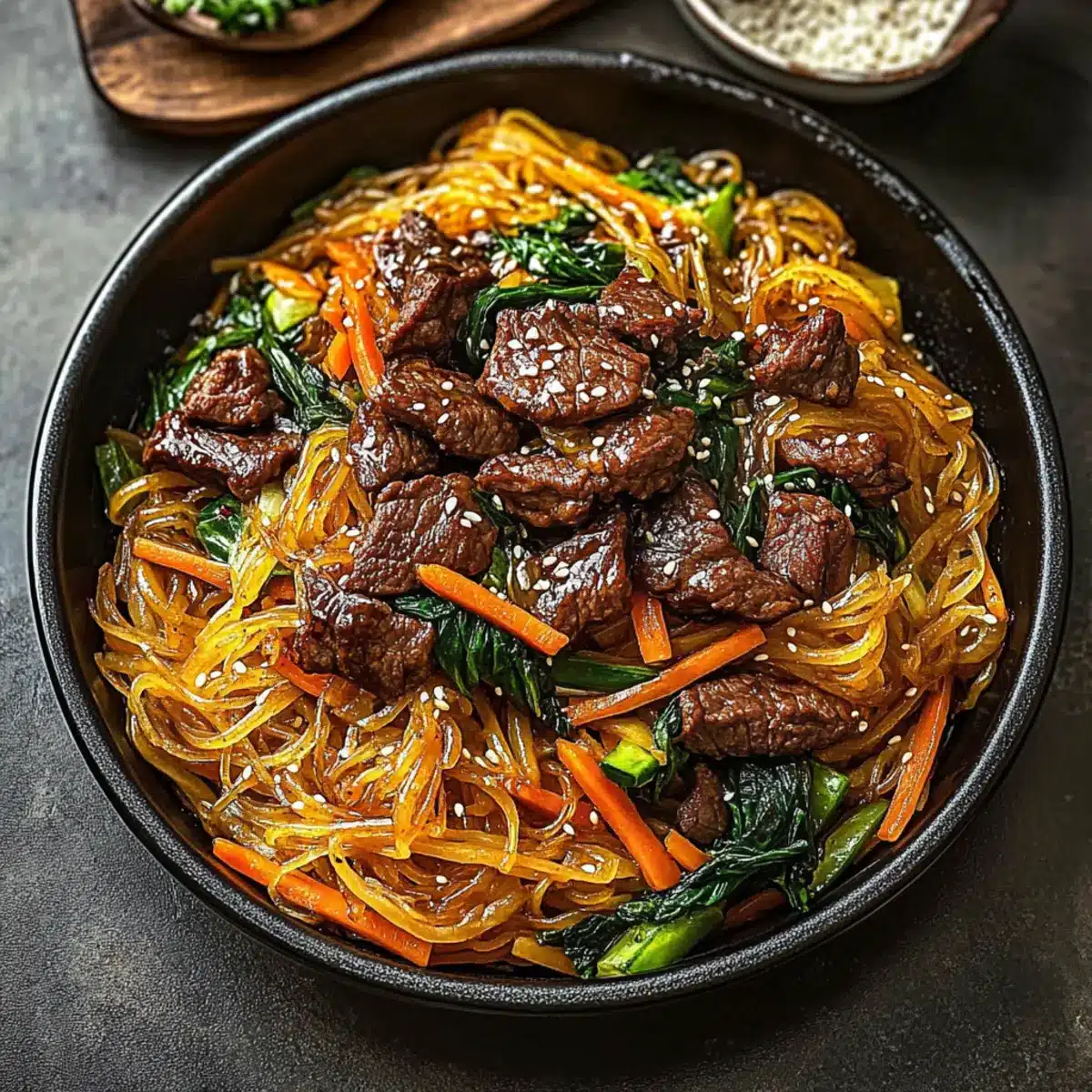
Japchae Recipe FAQs
How do I choose the right sweet potato noodles for Japchae?
Absolutely! When selecting sweet potato noodles, look for packages labeled “dangmyeon.” They should be a translucent grayish color and feel firm to the touch. Check the ingredients to ensure they are purely made from sweet potatoes and water, making them gluten-free. Avoid any packages with dark spots or a strong odor, as these can indicate age.
What is the best way to store leftover Japchae?
After enjoying your delicious Japchae, transfer any leftovers into an airtight container. They can be stored in the refrigerator for up to 3 days. Ensure the lid is sealed well to retain moisture and freshness. When ready to eat again, gently reheat them on the stovetop to restore the noodles’ texture.
Can I freeze Japchae and how do I do it?
Very much! To freeze Japchae, allow it to cool completely before portioning it into airtight freezer-safe containers. It’s best if consumed within 2 months for optimal flavor and texture. When you’re ready to enjoy it, simply thaw it in the refrigerator overnight. Reheat in a skillet over medium heat, adding a splash of soy sauce or water to prevent it from drying out.
What common mistakes should I avoid when making Japchae?
To avoid mistakes, be mindful of noodle cooking time; overcooking can lead to mushy noodles instead of the desired chewy texture. Also, remember to have all your ingredients prepped and ready to go before starting to cook, as stir-frying happens quickly. Finally, don’t crowd the pan with too many vegetables at once to ensure even cooking.
Is Japchae suitable for people with allergies or dietary restrictions?
Certainly! If you’re accommodating someone with dietary restrictions, Japchae can be easily modified. For gluten-free options, ensure you use gluten-free soy sauce or tamari. You can also skip animal proteins and include tofu or additional vegetables for a vegetarian version. Always check for specific allergies concerning ingredients, especially for soy if there’s a concern.
Can I add other vegetables to Japchae?
Absolutely! One of the joys of Japchae is its flexibility. You can easily incorporate vegetables like mushrooms, zucchini, or snap peas. Just slice them thinly for even cooking. Make it seasonal by adding whatever veggies are fresh in your market, and don’t be afraid to get creative—each bowl can be a different colorful masterpiece!
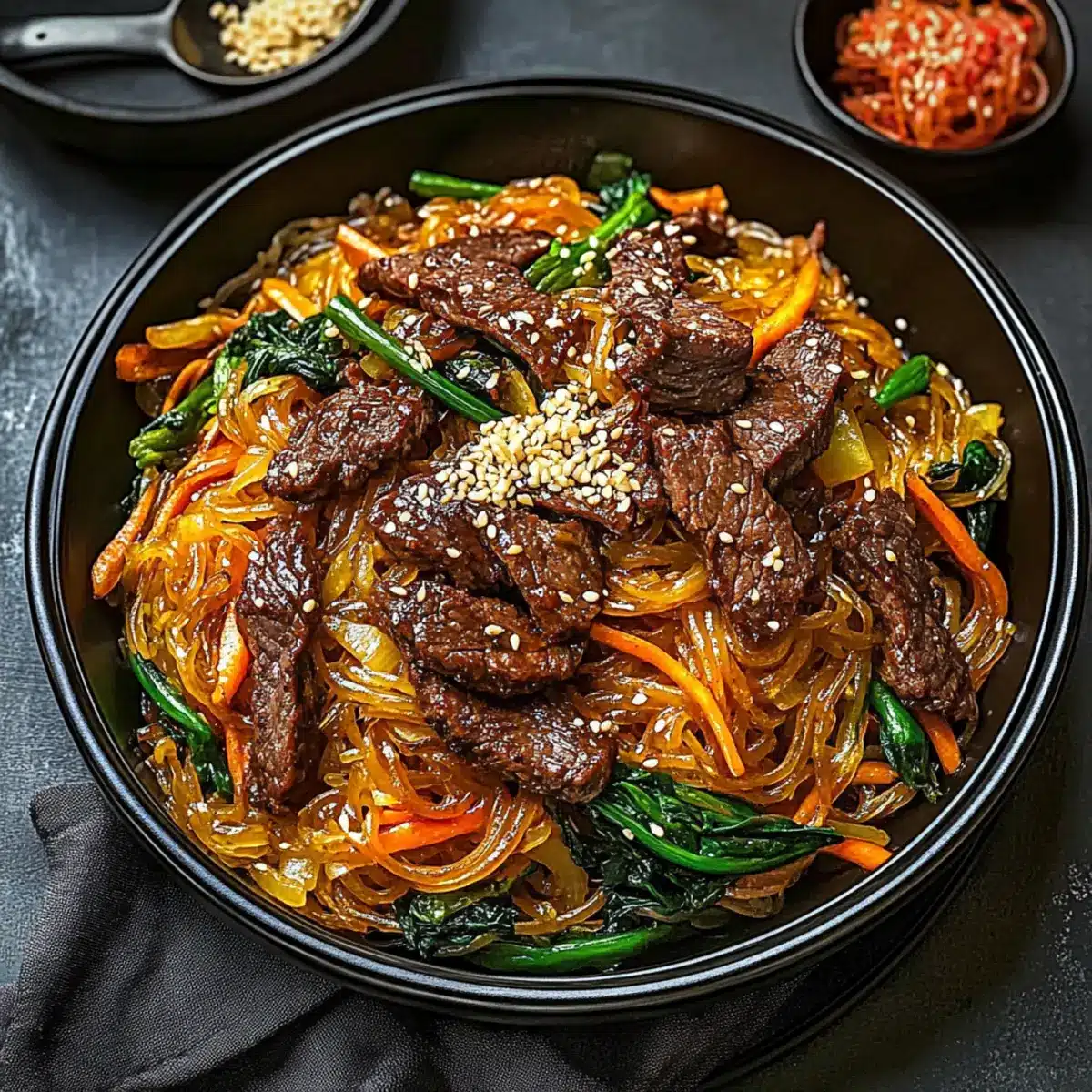
Japchae: Irresistible Korean Noodles You Can Customize!
Ingredients
Equipment
Method
- Soak the sweet potato noodles in hot water for about 30 minutes until softened. Drain and set aside.
- Slice the beef thinly against the grain. Heat oil in a large skillet over medium-high heat, add beef, and stir-fry for 4-5 minutes. Remove and set aside.
- Add more oil to the skillet and stir-fry the carrots, bell peppers, and spinach for 3-4 minutes until vibrant and just tender.
- Return the beef to the skillet, add the soaked sweet potato noodles, soy sauce, and sesame oil. Toss everything gently for 2-3 minutes until heated through.
- Turn off the heat and garnish with chopped green onions. Serve warm.
Leave a Reply